

Property industry reaction to the Treasury’s spring forecast has been muted, with a mix of relief at no major changes and claims of a missed opportunity for stamp duty reform.
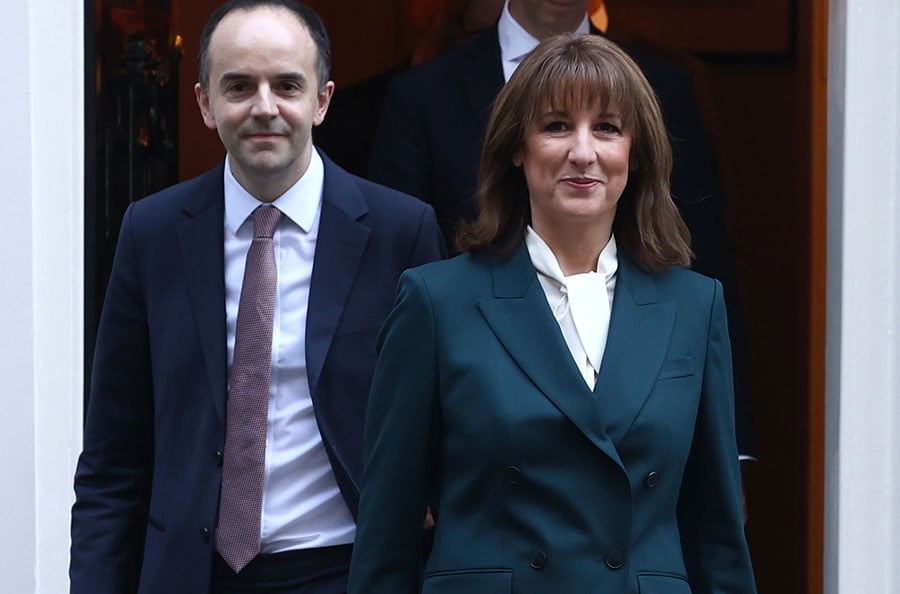
Chancellor Rachel Reeves opened her speech by insisting the government has the right economic plan for the country, which she said is even more important in a world which has become yet more uncertain in recent days.
“With unfolding conflict in Iran and the Middle East it is incumbent on me and on this government to chart a course through that uncertainty to secure our economy against shocks and protect families from the turbulence that we see beyond our borders,” the chancellor said, before expressing gratitude to the armed forces.
Reeves insisted the government’s plan was on the right course, with inflation and borrowing down and living standards up. “Keeping inflation low and stable as possible is the best way to support family incomes and reduce pressures on the cost of living,” the chancellor said.
With only a passing mention to housing and affordability, there was little in the forecast for property commentators to react to, which Rightmove’s Colleen Babcock found reassuring.
“After the long build‑up to November’s autumn budget, which was full of near‑daily rumours about tax and policy changes, it’s been reassuring to see a much calmer run‑up to today’s spring forecast,” she said.
“It was always expected to be lower‑key, and the lack of headline‑grabbing announcements should help give movers more confidence and certainty right now.”
Ben Thompson, director of Home Moving Strategy, Mortgage Advice Bureau, agreed. “In the current climate, ‘no surprises’ is actually good news,” he said.
“We weren’t expecting fireworks from the spring statement, and in many ways that’s reassuring. Right now, the housing market doesn’t need dramatic announcements or last-minute policy changes – it needs stability. So a statement that leaves housing largely untouched is, in itself, a positive.”
Propertymark CEO Nathan Emerson welcomed the focus on supporting economic stability but said the government needs more ambitious investment to meet housing needs. “Latest figures from the Office for National Statistics show that just over 100,000 homes were completed between January and September 2025, an 11% decrease from the same period in 2024,” he pointed out.
Looking ahead to the autumn budget, commentators were in agreement that stamp duty changes are needed.
“The current bandings haven’t kept up with house prices, and as a result less than half of homes in England are now stamp‑duty free to first-time buyers, falling to just one in ten homes in higher‑priced regions like London,” Rightmove’s Babock said.
“With around seven or eight months to go until the autumn budget, there’s time for the government to give some serious thought about how the system could be improved. That could mean a more regionalised approach, higher zero‑rate thresholds, spreading payments over a longer period, or even scrapping stamp duty altogether. In its current form, stamp duty remains a major barrier to movement, which isn’t good for would-be buyers and sellers, or for the wider economy.”
“Stamp duty is still a major sticking point right across the housing chain – whether you’re a first-time buyer, a growing family needing more space, or someone looking to downsize,” Felicity Barnett, new build and affordable housing partnerships manager at the Mortgage Advice Bureau said.
“If the government truly wants to boost growth and deliver more homes, we need a clear, long-term housing strategy that goes beyond short political cycles. Demand for new homes is still strong, and 2026 is looking increasingly positive. Now it’s about making sure policy supports that momentum – giving developers, housing providers, and homebuyers the confidence to move forward with their homebuying goals.
“We’ve heard the big headline commitments – such as 1.5 million homes and ‘build, baby, build’ – but 12 months on, we’re still waiting for clarity on how that ambition will actually be delivered.”










One Response
Everything every government has done for the last 20 years has been based on surviving the short term. Governments are not thinking long term. There is so much that could be done which could make a lot of things better in the next 5, 10, 15, 20 years but they are only interested in getting through the next 12 months, next 6 months, next 3 months, even the next day.
Opposition parties are just as bad. All they are interested in is sacking the next minister. They do not care for the national interest more whoever is next up to be replaced.