


The threshold at which the Law Society can be required to hold a Special General Meeting (SGM) could rise tenfold as part of proposals put forward at the Annual General Meeting(AGM).
In an article outlining how the Law Society is ‘modernising its governance’ published in the Law Society Gazette, Law Society CEO Ian Jeffery said the organisation had conducted a review and found the threshold of 100 members, around 0.05% of the 216,000 members, was well below that of ‘comparable organisations’ which range from 1% to 5% of their membership. The proposal to set the threshold at 10 times its current level, 1000 members.
“Given the resources required to stage a special general meeting – both in financial terms and in the diversion of resources – it is not surprising that higher thresholds than those currently in place at the Law Society are generally required. After all, those resources are funded by every single member. Increasing the Law Society threshold to 0.5% of our members – equivalent to 1,000 solicitors – would bring us closer to, although still below, modern practices and would represent better value and use of resources for members as a whole.”
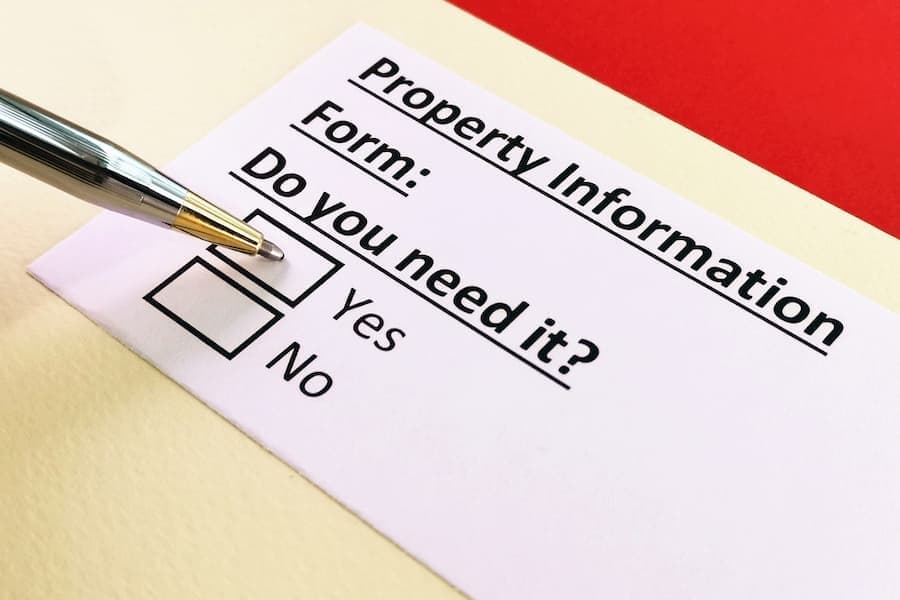
The SGM function came to prominence last year after the Property Lawyers Action Group, later renamed Property Lawyers Alliance, mobilised conveyancers around changes to the TA6 Property Information protocol form. Concern around the way in which the Law Society had handled the updated form to include additional elements of up front and material information, saw the threshold 100 signatories reached within 24 hours and a vote of no confidence in Law Society CEO Ian Jeffery and then-President Nick Emmerson was called. It was notable much of the activity was driven by social media, something Jeffery acknowledges, saying:
“The threshold of around 1,000 members would be easily achieved in today’s social media landscape, where support can be rallied almost instantly. This step is a practical response to balance the interests of all members while maintaining the many existing channels members have to share their views and concerns.”
Although ultimately unsuccessful, the Law Society embarked on a subsequent consultation to undertake wholesale review of the fifth edition, with a sixth edition to be launched in the Autumn of this year.
In reviewing the threshold the Law Society in its notes accompany the AGM say the SGM:
“…has a high cost to the Law Society. There is a financial cost, for example the hire of IT and audio-visual equipment for holding a hybrid meeting and revenue loss from the use of the Law Society’s commercial space, which members ultimately pay for. There is also a cost associated with the time that has to be devoted to the planning and staging of a SGM and the resources that must be diverted from delivering the Law Society’s core functions in support of members.”
The threshold was set in 1975 when its membership was 38,000, roughly 0.26% of the membership. Since then the growth of the membership to 216,000 means the proportion of members required to trigger an SGM is 0.046%. By comparison the Bar Council’s threshold for holding a SGM is equivalent to 0.83% of its membership; The Law Society of Ireland is 0.9%; The Institute of Chartered Accountants and the British Medical Association both apply a threshold equivalent to 1% of membership and the Royal Institution of Chartered Surveyors applies 3%. CILEX applies a threshold equivalent to 10% of membership.
The Law Society’s AGM takes place on 8 October with more information on the Law Society website.











One Response
TLS counts the cost of holding Special General Meetings in terms of lost revenue and “the resources that must be diverted from delivering the Law Society’s core functions in support of members.”
But isn’t it a core function of TLS to support its members and listen when its members voice concerns about initiatives imposed without consultation?
This was the reality the Property Lawyers Alliance faced when it called for a SGM last year. TLS was not listening to or supporting its specialist property solicitors.
Over 300 solicitors felt strongly enough about the issues to participate on the day, and thereby also incurred costs in terms of lost earnings or annual leave.
At the AGM only 91 elected Council members can vote, a select minority that have time to spare to devote to getting themselves elected.
It feels to me as if TLS is not protecting its members’ resources. In reality TLS is erecting barriers to make it more difficult for its members’ to be heard, by making the process more difficult.
A sad day for solicitors everywhere.