
March 2026 saw the government announce the proposed construction of seven new towns which could help deliver a quarter of a million homes. It’s hoped the fresh settlements will secure a large portion of the 1.5 million homes target promised before the conclusion of the current parliament. Knights planning lawyer Hannah Smith shares her thoughts on what could happen next.
There’s been a lot of excitement following the government’s recent new towns pledge which aims to fix the housing shortage. However, evidence suggests it will only go so far in helping to deliver the 1.5 million new homes target.
This isn’t because these plans haven’t been well thought out or won’t be executed in the right way, but more to do with the reality currently faced by the planning system.
For context, the introduction of new towns isn’t a recent one and they, in themselves, have an interesting history.
The foundations of new towns
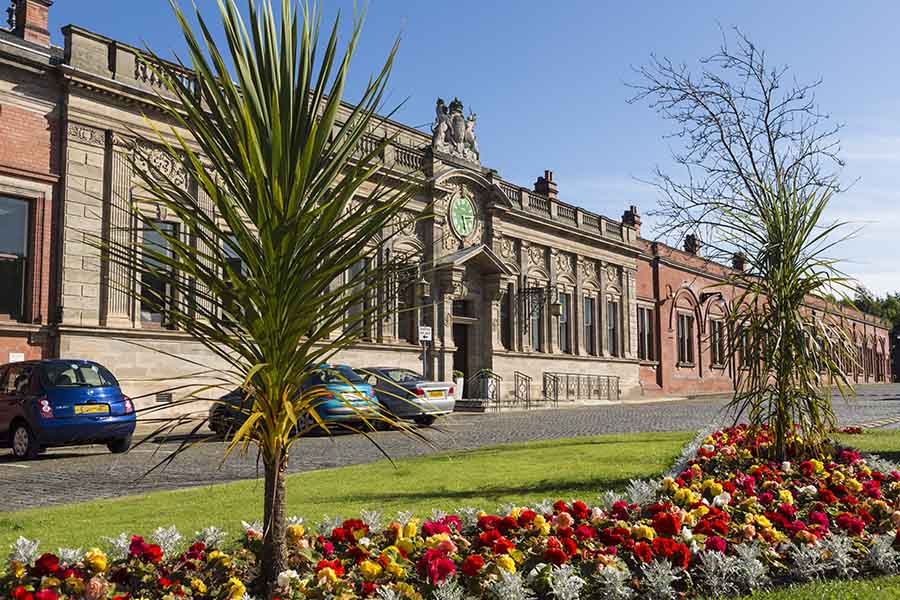
The concept of new towns, settlements designed and built with an overarching plan, including schools, transport connections and workplaces, have their roots in the Victorian garden cities, with the model villages like Port Sunlight (pictured), Bournville and Saltaire created for factory workers of the Victorian moral revolution.
The first generation of modern new towns came about after the Second World War to rehouse families after the Blitz, with towns such as Stevenage and Welwyn Garden City. In the 1960s, further towns were envisaged, including perhaps the most notable, Milton Keynes, with its particularly 1960s aesthetic.
An example of how these towns can work is Poundbury, the award-winning village development initiated by King Charles in the 1980s. Poundbury showcases sustainable technologies, such as a biomethane to grid plant providing renewable heat to the village.
Learning from mistakes
However, mistakes were made with Poundbury. Criticisms around parking and empty commercial buildings, owing perhaps to a miscalculation of the changing demands of modern life, were made; it’s important that planners for these new towns take stock and learn from these errors.
Despite issues, there are plenty of examples of where these towns have worked and, when it comes to delivering housing provision in the future, I think the introduction of more of these settlements is fundamentally a good idea.
However, I don’t think they come close to being enough to deliver the current housing target in time – with the original quota of 12 new towns already reduced to seven.
It’s not being negative for the sake of it, but the current economic and political climate is proving difficult to manoeuvre – with processes not being able to move as quickly as we would like them to.
Even taking into consideration the fact that the framework around new towns tends to be a little bit more straightforward than the traditional planning system the process to get to that point is still difficult.
A wider impact
Councils are struggling and planning authorities are historically under-resourced. There’s increasing pressure on quick turnarounds so it’s vital that resourcing is focused at the right levels to enable developments get through the system as efficiently as possible.
Time is also a major issue for developers and there are many examples of new towns, proposed in previous parliaments, that have been slow to get off the mark.
The need for these towns to have designed and developed master plans, for environmental assessments to be put in place, reviewed and consented, to have new development specific planning authorities created provides if not obstacles, then at the very least, delays – including a wider impact on the political landscape locally.
Blue sky thinking
It’s important also not to ignore the economic instability we’re currently experiencing with building material prices having been on the increase for some time. There’s funding available, which is great, but we need to ensure it is proportionate to what these large scale developments actually cost.
With all this in mind, there is a level of frustration amongst planning lawyers and practitioners that a lot of the policies being announced are very blue sky thinking.
They’re positive but, when you look into the reality, applications are getting rejected and developments that are ready to go aren’t getting the necessary consideration at planning hearings – with some getting held up for years.
We could very well see these new settlements built out over the next 15 or 20 years but it’s hard to see, at this time, how they make any significant dent into the 1.5 million homes required before the end of this parliament.
All these issues can be overcome but whether that’s before the next general election is the big question.
About the author
 Hannah Smith is an associate planning lawyer within the Knights’ planning team with experience in a range of private and lending work. With a background in commercial real estate, Hannah has experience in a range of sectors, including assisting housing developers, affordable housing providers and commercial developers.