
Whilst almost a third of people believe their local area is in decline, fewer than one in 10 have taken action to help shape its future, says new research from the Royal Town Planning Institute (RTPI).
The findings show a stark disconnect between how communities feel about their local area, and the steps being taken to look after it. Despite over half (57%) of people feeling proud of their neighbourhood, nearly nine in 10 (87%) haven’t engaged in the planning decisions that determine its future.
The YouGov research, launched as part of the Institute’s ‘It Takes Planners & You’ campaign, comes at a critical time for local communities in the UK, with over 13,000 high street shops closing in 2024 alone and 128,000 households currently living in temporary accommodation.
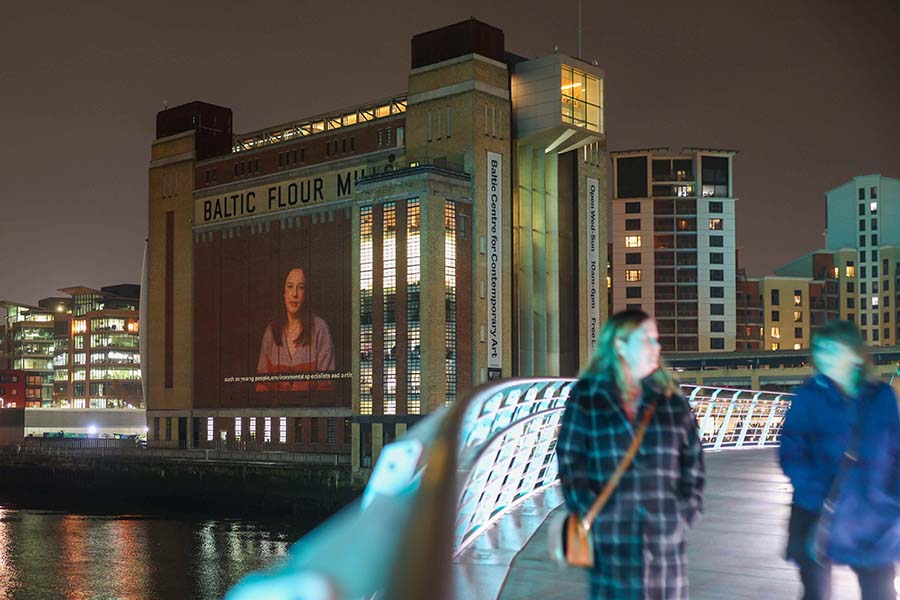
The campaign launched with a video projection onto the Baltic Centre for Contemporary Art in Gateshead (pictured) and urges communities to re-evaluate planning as a tool to build ‘better, fairer, more sustainable places’.
RTPI’s findings also challenge perceptions around public resistance to planning projects. Despite claims that so-called ‘Nimby’ (Not in My Backyard) opposition is holding back development, two thirds of respondents (67%) are either open to or supportive of new development in their community.
When asked what makes them proud of their area, respondents pointed to good-quality green spaces (61%), safety (58%) and strong community facilities (33%), which the RTPI says are all largely shaped by effective town planning. Yet despite this support, only 7% of people are actively involved in local planning decisions, such as responding to consultations or attending planning meetings.
When asked why, a third (33%) said they didn’t know how to get involved, while two in five (39%) felt their participation wouldn’t make a difference. Almost a third (29%) of people surveyed said they had heard of planning but didn’t know what planners did, while almost one in five (19%) had not heard of town planning.
Helen Fadipe, president, RTPI, said:
“Planners are at the frontline of some of Britain’s biggest challenges, from helping to meet housing needs to creating places where people and nature can thrive for generations to come. Yet awareness of how planning works remains limited, and as a result, many people feel left out or unsure how their views can make a difference.
“It’s vital that we change that perception and highlight the positive power of planning. Planning works best when it’s built on collaboration between planners and the public, and there’s still a job to be done to show people not just that they can be part of the process, but that they should play a role in shaping the future of their area. Together, we can make a real difference.”
Last month, the government announced a series of last-minute amendments to the Planning and Infrastructure Bill, which it said would slash planning delays and speed up home building. The plans have been criticised for removing planning responsibility from local authorities and denying communities a voice in decisions that directly affect their local areas.
In a Panorama report on the government’s pledge to build 1.5 million homes, Dr Abi O’Connor, urban sociologist at the University of Sheffield, said the current process for house building is a ‘developer led model’ with profit ‘always chosen over the needs of the people’.