


Enquiries continue to irritate me.
I was acting in a sale and the buyer’s solicitor raised three pages of enquiries, most of which were not relevant.
My client was struggling with the sale as it was a result of a separation, so I was trying to shield her from the constant chasing emails and phone calls – but she was finding the whole process very difficult.
The sale collapsed. The first-time buyer decided not to proceed (which is a whole other diary entry for another week) so the property was re-advertised. It did not take my client long to agree another sale.
The new buyer instructed a solicitor in a local firm I respect and like working with. They raised three queries: yes, you read that right! Three queries, not three pages of enquiries.
Now, how do you explain that to a client?
Is the new buyer’s solicitor not doing their job properly? Of course they are.
The firm is reading the documents I have carefully checked prior to sending and decided they cover all the points they need to be aware of.
They are not asking me if a covenant from 1896 is enforceable. They are not asking me a page worth of enquiries about non-existent radon.
They are adopting a sensible approach.
But the estate agent decided to tell the buyer that the solicitor was not asking questions.
It all became very tense.
I’m surprised the estate agent did this – wouldn’t you think they would just want the transaction to complete?
So here is my tip for today: think about enquiries.
Look at the protocol and see what enquires you can ask. What do you need to know? What is apparent from the documents?
Or are you using an app or AI to ask your questions for you?
This column is written by a real high street conveyancer who wishes to remain anonymous. The views expressed are those of the author and not those of Today’s Conveyancer.
Read more in Today’s Conveyancer every week.












6 responses
Another example of the ridiculousness of the situation:
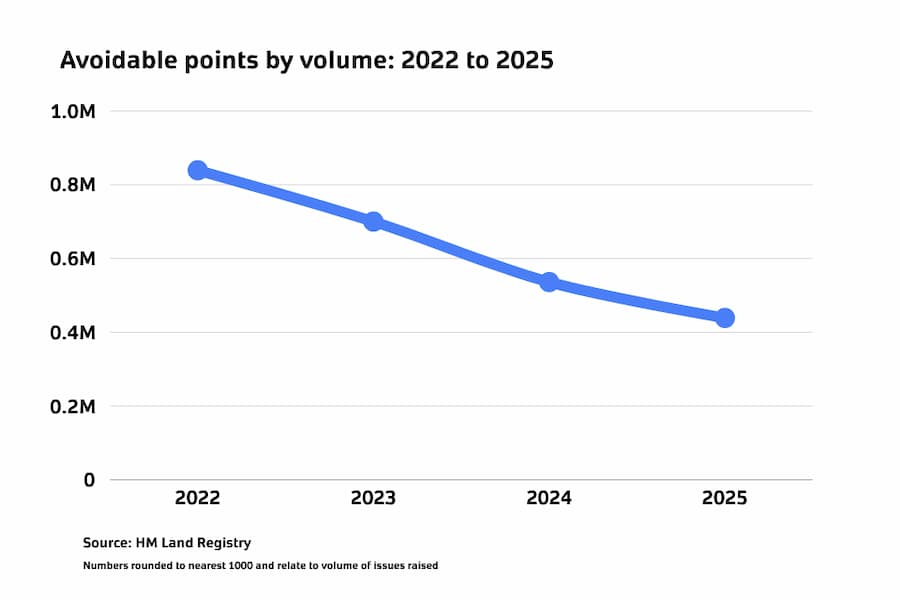
It was recently reported that a contract pack was sent out to a firm acting for a potential buyer, whereupon 6 additional enquiries were raised. When that sale aborted, for non-legal reasons, the same pack was sent to another firm, but an astonishing 46 additional enquiries were raised.
This makes the profession look bad, and is an issue that I will be raising (with an idea for a solution) at the BLG conference on Wednesday.
The GRACE notes should be on the desk/desktop of every trainee/apprentice undertaking residential conveyancing (and experienced conveyancers too!
https://todaysconveyancer.co.uk/wp-content/uploads/2025/06/GRACE-v1-2025-1-F.pdf
I agree that the GRACE notes are helpful but, going back to basics, most law firms claim to adopt the Law Society Conveyancing Protocol (if they are CQS accredited then it is compulsory for them to do so). If they were actually following the Protocol, they would know that step 15 say that a buyer’s lawyer should:
* Raise only specific additional enquiries required to clarify issues arising out of the documents submitted, or
which are relevant to the title, existing or planned use nature or location of the property or which the buyer has
expressly requested.
* Do not raise any additional enquiries about the state and condition of the building unless arising out of your
conveyancing search results, your buyer’s own enquiries, inspection or their surveyor’s report.
* Indiscriminate use of ‘standard’ additional enquiries may constitute a breach of this Protocol. If such enquiries are submitted, they are not required to be dealt with by the seller/seller’s conveyancer.
* The seller’s conveyancer does not need to obtain the seller’s answers to any enquiry seeking opinion rather than fact.
When acting for a seller in a transaction where there are a multitude of unnecessary enquiries, I do my best to resist – citing the Protocol. However there is often push back against this. To dig your heels in too much can cause delays, which clients will not appreciate.
I really hope that as an industry we can get better at this.
Just goes to show no two conveyancers are created equal and those who think that this will all be solved by “digitising” information are barking up the wrong tree. It’s the pilot, not the plane.
“They are not asking me if a covenant from 1896 is enforceable.”
I would say that whether or not this should be raised depends entirely on what it is, rather than a matter of age alone.
If it is a typical late 19th century restrictive covenant preventing various industrial activities that would be undesirable in a residential area e.g. a tannery, then it should be ignored.
If however it is a covenant not to build more than one dwelling and your client is selling a house with a granny annex, or a flat in a converted house or it is clear that the house is part of a plot of land that was subjected to that covenant then it would be entirely legitimate to raise it.
“If however it is a covenant not to build more than one dwelling and your client is selling a house with a granny annex, or a flat in a converted house or it is clear that the house is part of a plot of land that was subjected to that covenant then it would be entirely legitimate to raise it.”
This is the sort of sweeping statement that makes my blood boil. A covenant not to build – would this actually apply to a flat in a converted house !!???
Has it been established who is the beneficiary of that covenant? Has it been considered whether it a company that is long since dissolved (Crest Nicholson v McAllister)? Has it been contemplated that the seller from 1896 will long since have died (Margerison v Bates)? How many times has the Property been sold since the additional structurte has been added (Powell v Helmsley)? How long ago was the ‘additional’ structure added (Hepworth v Pickles)? Have these elements actually been considered before raising an entirely unnecessary enquiry?
Does anyone ever actually apply the law anymore?