
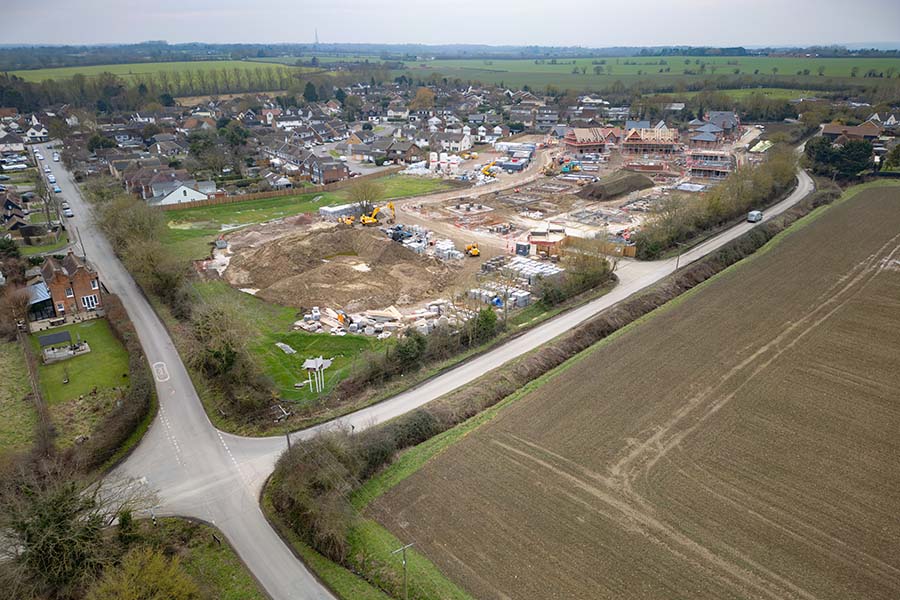

Councils will be forced to rewrite local plans to include higher housing targets or face being stripped of their decision-making powers, according to a report in The Guardian.
The Ministry of Housing, Communities and Local Government (MHCLG) is reportedly planning to cut the number of appeals local authorities can have overturned before sanctions are imposed from 10% to 5%. Councils that fail to overturn locally agreed decisions in order to approve new housing developments could be forced to hand over control of their planning departments to Whitehall officials.
To meet the government’s housing target of 1.5 million new homes, councils must demonstrate how they will increase supply over the next five years. The National Planning Policy Framework said planning applications should be granted where there was no up-to-date development plan, unless certain policy protections ‘provide a strong reason for refusing the development’.
‘The government is taking decisive action to deliver 1.5 million homes through our plan for change, with major planning reforms and a landmark planning and infrastructure bill already introduced to drive housebuilding to its highest level in 40 years’, an MHCLG spokesperson said.
“We are exploring plans to go further by making it easier to intervene where councils consistently make poor quality decisions about planning applications and prevent the delivery of the homes and infrastructure we need. This will help to get Britain building again and restore the dream of home ownership.”
The plan has been criticised by Town and Country Planning Association director of policy Hugh Ellis, who said councils’ carefully crafted local plans are being ripped up by central government to the detriment of the local environment.
Last week, Horsham District Council in West Sussex said it would launch a judicial review to challenge the decision of a government-appointed planning inspector which overturned the council’s block on building on a golf course.
The council’s plan, devised in consultation with the Environment Agency, had restricted the number of new homes due to a shortage of drinking water and a lack of travel options. By overturning the decision, the council said the government inspector had made ‘significant legal errors’ and the ‘unsustainable’ plans would result in ‘significant implications for [the] district and its communities’.
Plans for new homes on flood plains in Kent and Somerset have also been approved by government planning inspectors after appeals, reportedly against the advice of local planning officers.

















One Response
Does anyone else not think this is stupid? The blame will be laid at the conveyancer’s door again when properties cannot be bought or sold? Surely the Environment Agency cannot be sanctioning building on flood plains when we all know that developers will not build in any flood prevention measures to their design and build process and will also leave home owners with properties suffering from subsidence, etc. Poor quality newbuilds. Building where there is a lack of infrastructure is idiotic because it means more reliance on cars (which by the way developers never leave enough space for parking) adding to the climate change burder.
What is happening to this country? Profit over people (and idiots being left in charge).