
Updates to the Building Regulations as part of the Future Homes and Buildings Standards have come into effect, in an effort to reduce reliance on fossil fuels for home heating by improving energy efficiency standards for new homes, which should also help reduce energy bills.
In a circular letter published by the Ministry of Housing, Communities & Local Government last week, applicable to buildings and building work in England, the government announced amendments to the Building Regulations 2010 (the 2010 Regulations) to implement the Future Homes and Buildings Standards. The response follows a consultation which closed in 2024.
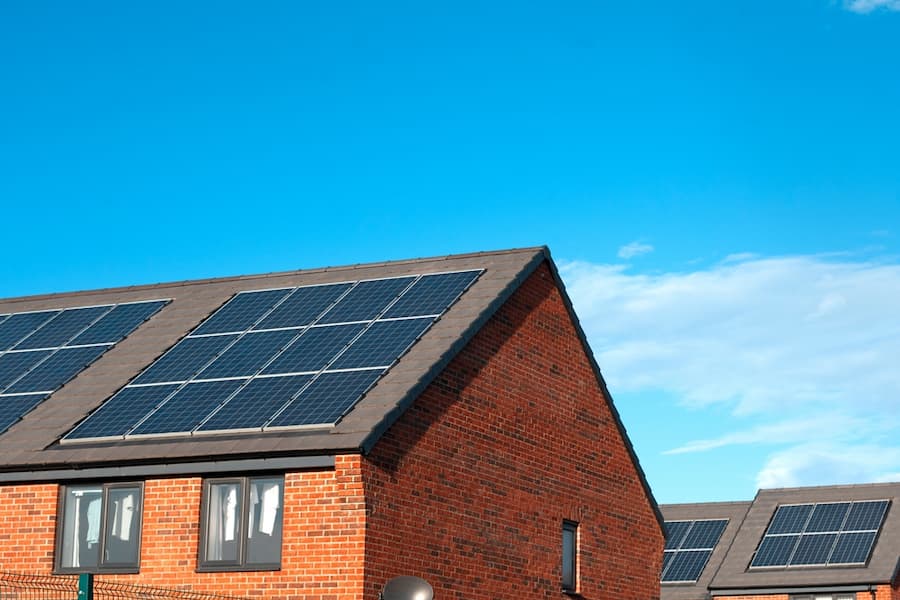
The Future Homes and Buildings Standards will ensure that new homes and non-domestic buildings are built with low carbon heating and high levels of energy efficiency, so that buildings constructed to these standards will not require retrofitting the electricity grid decarbonises. In practice this will mean new buildings will be required to have solar panels fitted, and either a heat pump fitted, or be connected to a heating network.
The regulations revoke earlier transitional arrangements made in 2013 and related arrangements made in 2021, which enabled construction to 2010 energy efficiency standards – in each case subject to some exceptions. A transition period will apply to allow for implementation.
To support compliance with the regulations, updated statutory guidance has been issued covering:
- Routes for dwellings or buildings other than dwellings (including mixed-use buildings) connected to a new or existing heat network to demonstrate compliance.
- Limiting heat loss from low carbon heating systems.
- Minimum building services efficiencies and controls, heat pump controls, fixing operational and maintenance information to heat pumps, and insulation for building heat distribution systems.
- The commissioning and installation of fixed building services, including clarifying the importance of following manufacturers’ instructions for heat pump installations, on-site electricity storage systems, and highlighting the role of competent persons schemes when installing a heat pump or mechanical ventilation.
- Routes for certifying fixed building services installations and setting out available enforcement options where work does not meet the required standards.
- The new functional requirement (L3) in relation to the installation of a system for onsite renewable electricity when a dwelling or building containing a dwelling is erected.
- The Home User Guide, including guidance to help ensure Home User Guides are provided to material change of use dwelling owners.
Conveyancers will need to ensure procedures and checklists are updated in preparation for compliance, particularly in relation to documentation evidence for the new energy and information provisions, especially for mortgage, insurance, and resale purposes.
Gwyn Roberts, the Building Research Establishment’s head of government and scientific delivery, said the announcement is a key milestone in the UK’s transition to green energy. He added:
“After centuries of heating homes with fossil fuels being the norm in the UK, the Government has made the positive decision to transition home heating towards cleaner, more efficient technologies. The new standard is an opportunity for low carbon homes to be competitively financed with mortgages that reflect the performance that they deliver – unlocking much needed housing supply.
“However, the Government needs to take further steps to improve the standards for homes created in existing buildings to address whole building energy efficiency, and overheating risk, a known problem among much of this kind of new housing.
“It’s clear that the world is facing growing instability in fossil fuel supplies, which is driving the risk of a wider energy and fuel crisis. By shifting to cleaner, more efficient and more reliable forms of energy, we can reduce our dependence on volatile fossil fuels and protect ourselves from the kind of price shocks we’re seeing now.”