
A Cheshire-based residential conveyancing specialist is calling for caution as artificial intelligence (AI) becomes increasingly prominent in property law.
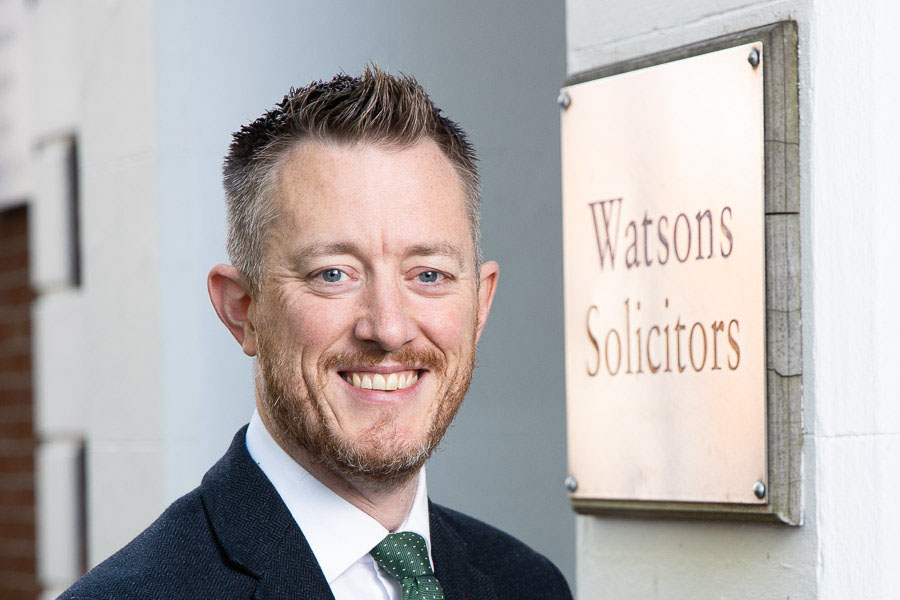
Chris Illingworth, partner and head of the conveyancing department at Watsons Solicitors in Warrington (pictured), admits the technology can produce instant results and support efficiency, but says its accuracy is questionable and should not replace professional judgement.
“It is very much a cautious approach from us at Watsons with regards to AI,” Illingworth said.
“There are still several grey areas and unknowns with regards to what is put into AI functions and what is produced.
“Increasingly, technology companies are offering services to law firms but given we deal day to day with highly confidential information, who we allow access to it requires careful and considered thought. It is widely known that some of the information that comes back from searches in large language models is nonsense and we are not in the business of dealing in anything but facts.”
He continued:
“We are not complete luddites and do use technology where appropriate to help us provide the best service to our clients, and without exposing them to risk. At the moment, however, we are very much focusing on everything being done by professionals, because what happens when AI is used and something goes wrong? Who is to blame?
“Technology constantly throws up potential new ways of working, but we remain to be convinced by how positive its usage can be for us right now.
“That may well change further down the line with the advances that are being made on a regular basis, although conveyancing has always been done best when humans with real world expertise are involved.”
Last year, a High Court ruling related to the use of AI in legal proceedings warned there would be ‘severe sanctions’ for lawyers who fail to comply with their professional obligations when using the technology.
Managing partners and heads of chambers must demonstrate that ‘practical and effective measures’ have been taken to ensure every person providing legal services complies with legal and professional obligations, and should ‘expect the court to inquire whether those leadership properties have been fulfilled’.
The comments were made in a judgment related to two cases in which the use of AI had resulted in the inclusion of non-existent citations and quotations.
In one case, the claimant’s barrister had cited five made-up cases and mis-stated the effect of a section in the Housing Act, using American spelling and “formulaic” prose. In another case, the claimant had carried out his own research using AI and passed it over to his solicitor, who failed to notice that 18 out of the 45 citations didn’t exist, and others didn’t contain the quotations claimed or have any relevance to the subject matter.
Although contempt proceedings were not initiated in either case, Dame Victoria Sharp stressed in the written judgment that this would not be a precedent. Lawyers who fail to comply with professional obligations when using AI, she said, “risk severe sanction”.
The judgment highlights the wider implications of the cases for the legal profession. Freely available generative AI tools such as ChatGPT “are not capable of conducting reliable legal research”, Dame Sharp said, and those who use AI ‘have a professional duty therefore to check the accuracy of such research by reference to authoritative sources, before using it in the course of their professional work’.
“This duty rests on lawyers who use artificial intelligence to conduct research themselves or rely on the work of others who have done so. This is no different from the responsibility of a lawyer who relies on the work of a trainee solicitor or a pupil barrister for example, or on information obtained from an internet search.”