
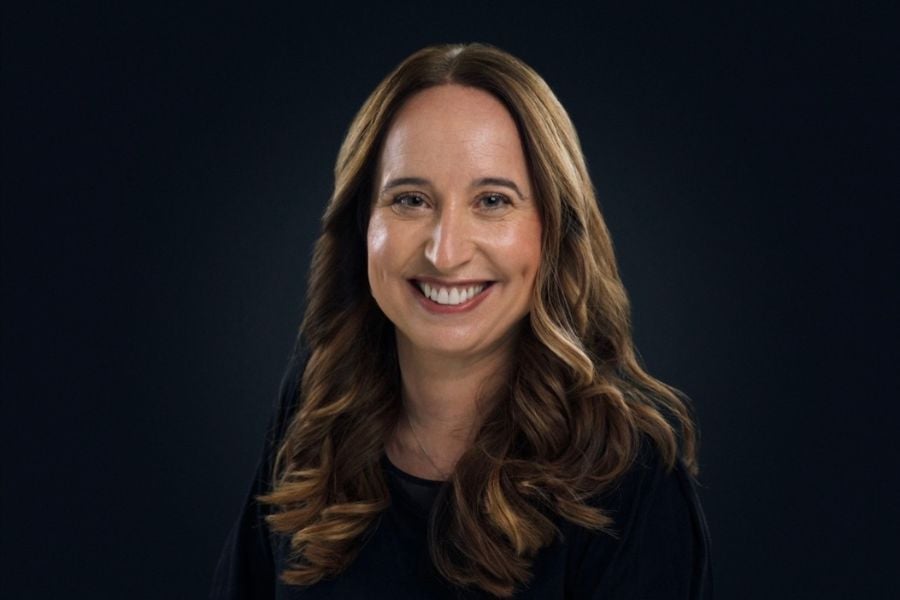

Angela Hesketh is a dual-qualified conveyancer with an extensive understanding of the challenges within residential property law and practice. Transitioning to consultancy, she advised startups on reshaping the industry whilst streamlining conveyancing processes. She has an unrelenting dedication to transformation together with a commitment to a more efficient, transparent, and user-centric property market. Angela sits as an executive member of the Open Property Data Association, co-chair of the Digital Identity Working Group of the Digital Property Market Steering Group, a professional member of the CILEX Disciplinary Tribunal and is an active participant of the Home Buying and Selling Council.
What was your career path to your current role?
It’s been a long and fairly winding road. I started out in 1990 as a trainee legal executive. I didn’t want to go to university at the time; I wanted to get stuck in, earn, and build something for myself. I found my way into conveyancing and, like many of us, never really left.
Over the next 30 years I worked across a range of law firms, qualifying as a legal executive in 1994 and specialising in conveyancing. Along the way I spent time in family law and wills and probate, but residential conveyancing was always my home, handling everything from sales and purchases to remortgages, new builds, shared ownership and equity release.
I’ve been fortunate to see the profession from many angles: managing teams, leading departments, holding director roles, and working in high street and volume practices and a number of large-scale developments including Tobacco Warehouse in Liverpool. I also got involved in areas that were less travelled at the time, such as equity release, where I was part of the original Equity Release Alliance set-up.
Alongside practice, I became increasingly involved in the wider profession serving on the CILEx Regulation disciplinary tribunal and contributing to industry bodies including the Conveyancing Association and Open Property Data Association.
In 2021, I stepped away from private practice to join Smoove as their head of conveyancing transformation. That gave me the opportunity to look at the transaction end-to-end through a different lens. It was a real turning point bringing together decades of frontline experience with technology and asking not just how we do things, but why we do them that way.
During that time, I worked closely with PEXA. I’d followed their journey before they entered the UK market, and their focus on the core of the transaction, money and title, stood out immediately. If we’re serious about reducing risk and improving outcomes, I believe that’s where the industry should focus. Joining PEXA felt like a natural next step and an opportunity to be part of meaningful change rather than managing the status quo.
Did you have any other career ambitions?
I wouldn’t say I started out as particularly ambitious; I was more of a ‘doer’ who liked to get things done. That shifted in my late twenties and early thirties when I began to recognise the opportunities available and started to think, “why shouldn’t I aim for that?”.
There were definite challenges along the way. The firm I thought I’d be with forever went into administration during the 2008 crash, which was incredibly tough. But it also forced a reset and gave me a much broader, more realistic view of the profession and the need to stay adaptable.
Alongside my legal career, I’ve pursued other interests. I qualified as a British Wheel of Yoga teacher and more recently as a professional coach. Both have influenced how I work with people. Leadership, for me, is not about creating people in your own image, but about helping others find their own path and confidence.
What keeps you motivated in your work?
Seeing first-hand how difficult the process can be for conveyancers as well as clients and knowing it doesn’t have to be that way. After so many years in practice, it’s the opportunity to genuinely improve that experience that keeps me motivated.
If you could change one thing about the transaction process, what would it be?
The lack of certainty and the mistrust it creates.
We’ve built a system where too much is unknown for too long, and that uncertainty drives stress, inefficiency and defensive behaviours across the entire chain. It shouldn’t be like that.
If we can move towards a model that provides earlier certainty around information, funds and outcomes we can fundamentally change the experience. That requires collaboration across the industry, but it’s absolutely achievable.
What has been the best development in conveyancing in the last 20 years?
We’ve seen important building blocks put in place improvements in ID verification, the evolution of case management systems, more structured approaches to enquiries, and greater access to title information through the Land Registry.
But the key point is that these are enablers, not solutions in themselves. Their real value depends entirely on how effectively they are adopted and integrated into the wider process and what is the next iteration.
And the worst?
Duplication without question.
We are still asking for the same information multiple times, in different formats, across different parts of the transaction. It’s inefficient, it’s frustrating, and it increases the risk of error.
We’ve also introduced layers of communication tools that are intended to improve transparency but often do the opposite. When updates are inconsistent or poorly understood, they erode trust rather than build it.
Until we address these structural issues, we will continue to add friction instead of removing it.
Do you think conveyancing will ever be fully digitalised?
Yes, but only if we’re prepared to rethink the process, not just digitise existing inefficiencies.
Digitalisation isn’t about putting moving current processes online as they are. It’s about redesigning the transaction to be more streamlined, secure and transparent from the outset.
Do you think it should be?
Yes, because consumer expectations have already moved on.
People manage their finances, identities and major life events digitally. Home moving shouldn’t be the exception. If we don’t evolve, the gap between expectation and experience will only widen.
What’s the best piece of advice anyone ever gave you regarding your career?
Believe in yourself but stay grounded. Be prepared to be wrong, listen before you speak, and don’t be afraid to aim high.
And importantly enjoy it. If you don’t, it’s okay to change direction. Careers don’t have to be linear.
What advice would you like to give to someone just starting out?
Focus on understanding the fundamentals of the transaction that knowledge will stay with you throughout your career.
Be curious, ask questions, and don’t be afraid to challenge how things are done. The profession needs fresh thinking as much as it needs technical expertise.
And don’t worry about having a perfectly mapped-out career. Some of the most valuable opportunities come from unexpected turns.
Tell us something people may be surprised to know about you…
I first appeared on TV in the late 1980s on Hitman and Her dancing very badly on stage in Blackpool alongside Pete Waterman and Michaela Strachan. Thankfully, my career has taken a slightly different direction since then, but the dancing is still as bad!
If you’d like to appear in a future profile, email press@todaysconveyancer.co.uk

















One Response
Please find that clip Angela: “I first appeared on TV in the late 1980s on Hitman and Her dancing very badly on stage in Blackpool alongside Pete Waterman and Michaela Strachan.”