Conveyancers are expected to treat the accuracy of their post completion applications to HM Land Registry as a “core professional responsibility” with regulatory consequences for persistent failure.
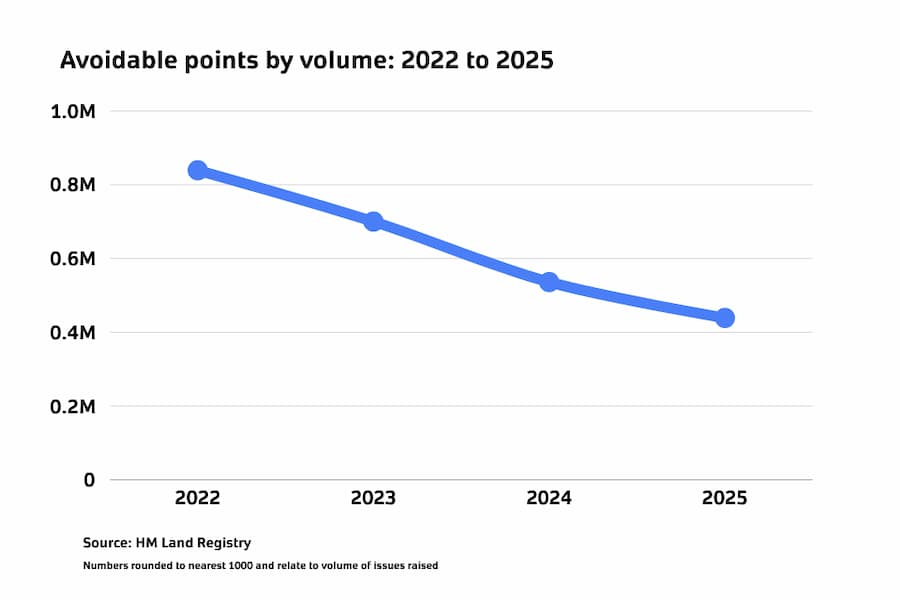
Post-completion is an area of “close scrutiny” said the regulator in its Risk Agenda 2026 published this week. Applications to HM Land Registry is specifically identified alongside Professional Ethics; Technology, AI and Innovation; Cryptocurrencies; and Complaints Handling amongst others issues the CLC says are key issues specific to the regulation of conveyancing practices. The quality of applications, and the number of requisitions, remains under close scrutiny, said the CLC with avoidable requisitions continuing to highlight inconsistencies across the conveyancing sector; the issue is now part of CLC inspections.
The regulator said it has recently written to a number of practices with higher-than-expected avoidable requisitions rates and asked them to provide an action plan to reduce them. It will be monitoring their effectiveness but is “encouraged by the high level of engagement so far”.
The Risk Agenda cautions that the characterisation of this work as ‘post-completion’ can create a misleading impression that it is administrative or secondary. At a time of greater scrutiny on lawyers’ ethics, it says: “The CLC expects practices to treat application accuracy as a core professional responsibility.”
On undertakings the CLC add firms must ensure that post-completion work is properly prioritised, with adequately resourced and trained teams in place: “This includes ensuring that all undertakings given are capable of being fulfilled and are complied with in a timely manner, and that clients receive the full service for which they have paid.”
The report adds: “Undertakings are a cornerstone of conveyancing practice. Failure to honour them – whether through delay, poor resourcing or inadequate processes – undermines client protection and market confidence. The CLC has made clear that such conduct may demonstrate a lack of integrity and an ethical behavioural issue. While some breaches may arise due to third-party delays (for example, lenders or managing agents), this does not remove responsibility from the firm. The CLC is increasing its monitoring of practices where repeated or systemic breaches are identified. Practices should be sure that they can fulfil an undertaking, such as obtaining a certificate of compliance from a management company that it turns out has gone out of business.
Elsewhere the 2026 agenda tackles the rapidly developing area of AI, warning its adoption is “reshaping how legal services are delivered” adding firms cannot afford to stand still. But, the agenda warns, AI introduces new considerations for firms including accuracy and reliability of AI-generated outputs, transparency with clients over its use, and the risk of overreliance on AI “eroding professional expertise over time.”
Firms are advised to take a “structured, systematic approach to adopting new tools” to include an assessment of suitability and interoperability with existing systems, data protection considerations, and ensuring staff are properly trained. The CLC recommends outputs are reviewed by a “competent individual” with an understanding of the legal implications: “technology should support, not replace, professional judgement” adds the report.
On its probate regulation the CLC said it is “taking an active role in the private client sector, holding regular meetings with HM Courts & Tribunals Service and joining its Probate Services Users Group.” The regulator has identified inheritance tax (IHT) changes and estate funding as a specific risk for practitioners working in the field. The inclusion of pensions in IHT calculations from April 2027 are expected to increase financial pressures on estates and may lead to greater demand for short-term estate funding solutions available through providers offering short-term loans to pay IHT pending estate administration, and beneficiary advances providing early access to inheritance funds.
Deputy chief executive of the CLC, Stephen Ward says: “Rewarding though the work is, the high levels of risk associated with conveyancing and private client matters should always be at the front of our minds. Practitioners understand this and we are pleased that generally we see very high standards across the board.
“But in busy practices, small issues can quickly become big ones if not tackled and the Risk Agenda forms part of our strategy to inform the profession of the regulatory hot spots. Prevention and assisted compliance are core to our philosophy – practitioners know this and so regularly engage with us to ensure they continue to operate in the best interests of their clients and the public at large.”