
The British Geological Survey (BGS) estimates up to 4.2 million homes in Britain could be affected by climate-related subsidence by 2070.
BGS projections suggest the number of British properties susceptible to clay shrink-swell is around 5% but this rises to 11%, or more than 4.2 million homes, under the highest-emissions scenario.
The data also shows that the most susceptible regions are found in highly populated parts of London, particularly in northern and central boroughs, including Camden, Islington and Barnet, as well as in Kent in the south-east of England.
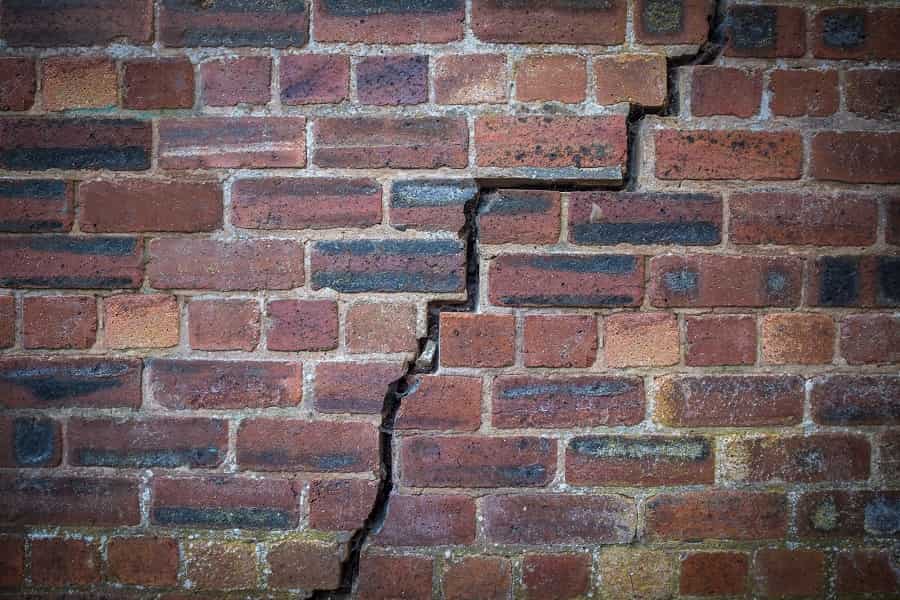
Shrink–swell ground movement, typically reported as subsidence, is one of the most damaging geohazards in the UK today. Many soils contain clay minerals that absorb water and swell when they get wet, then lose water and shrink as they dry out.
In 2025, the UK experienced the warmest spring on record and the driest in more than 50 years. As a result, subsidence-related insurance claims in the UK totalled £153 million in the first six months of 2025, according to the ABI.
The BGS GeoClimate Shrink–Swell dataset combines 1:50,000-scale geological maps of Great Britain with the highest-resolution climate change data from the UK Centre for Ecology & Hydrology, which is derived from and builds upon the Met Office’s UKCP18 climate projections.
It makes predictions for low, medium and high emissions scenarios between now and 2070.
Under the medium emissions scenario, the projected percentage of British properties highly likely or extremely likely to be susceptible to clay shrink–swell by 2070 is around 5%, or 1.8 million properties.
At the lowest end of the scale, if the emission scenario aligned to the Paris Agreement holds, the BSG dataset forecasts that, by 2070 around 500,000 properties could be affected by climate-related subsidence.
Under the high emissions emission scenario, more than 2.5 million homes in London are likely or extremely likely to be affected.
Anna Harrison, applied Quaternary scientist, BGS, said: “By combining geotechnical information about volume change potential with data about projected rainfall and temperature scenarios for the coming century, we have been able to identify the areas of Great Britain most likely to become susceptible to shrink–swell subsidence in the future.
“Dry weather and high temperatures are a major factor in the emergence of shrink–swell subsidence. Looking ahead, these increases in hotter, drier summers and warmer, wetter winters are projected to continue.”
She added: “Whilst we should be careful to note that these are projections, there are a number of ways planners, property owners and developers can help limit the potential effects of future subsidence-related issues, including taking specialist advice before starting major building work, avoiding planting trees with larger root systems close to properties, and ensuring the foundation designs of new constructions or extensions take into account the impact of climate change on shrinkable clays.”