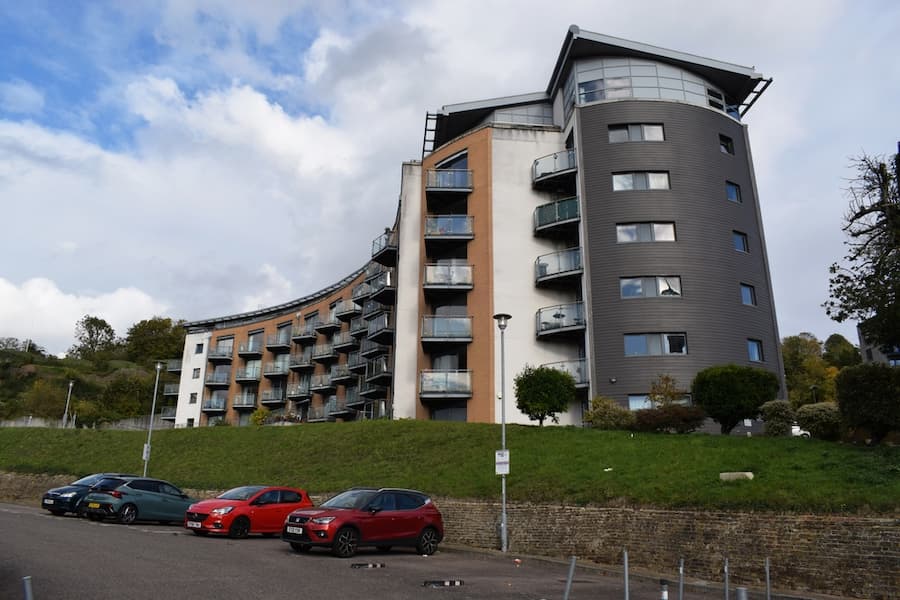

The letting agency responsible for managing the privately rented home belonging to Chancellor Rachel Reeves has admitted it failed to apply for the relevant licence required by the local housing authority. But a compliance expert has warned that failure to licence is a strict liability criminal offence that results in significant penalties for ‘hundreds of landlords every month’ – and ignorance is not a defence.
On Wednesday, the chancellor wrote to the prime minister explaining that the property, in the Dulwich Wood ward of Southward Council, was subject to selective licensing requirements and ‘regrettably’, she was ‘not aware that a licence was necessary’ and so did not obtain the licence in ‘an inadvertent mistake’.
In response, the prime minister assured the chancellor ‘further investigation is not necessary’. However, in a second letter sent on Thursday, Reeves admitted the letting agent appointed to manage the rental of the property had informed her husband a selective licence would be required and that the agency had told her it would apply on their behalf, but she accepted ‘full responsibility’ for the matter.
Reeves shared the emails from the letting agent, Harvey & Wheeler, which confirmed staff had offered to secure the selective licence at a cost of £900.00, with Reeves’ husband responding, ‘yes please, do go ahead’. The agent responded the same day to confirm ‘I will do the Selective Licence’.
In a statement issued on Thursday, the agency accepted responsibility for the error, which it said was due to a staff member leaving their role suddenly and failing to complete the application.
Subsequent media reports suggested Reeves had been ‘exonerated’ – but compliance expert Phil Turtle has warned that, as failure to licence is a strict liability crime, ignorance is not a valid legal defence.
‘Rachel Reeves has committed a strict liability crime under section 95 of the Housing Act 2004 (failure to licence a property) with unlimited fines if prosecuted in court’, the compliance director at Landlord Licensing and Defence explained.
“Alternatively, councils can issue a civil financial penalty up to £30,000 – and keep the money. Councils treat this as one of the most heinous crimes possible and we see dozens of small landlords every week fined often between £12,000 to £20,000 for this exact same criminal offence.
“Just like speeding, it is a strict liability crime and there is no defence of ‘I didn’t know’, or ‘my letting agent didn’t tell me’. Councils can be absolutely merciless in prosecuting small landlords because the resulting penalties have become a major revenue stream.”
Turtle says he’s worked with hundreds of landlords who have fallen foul of selective licensing and additional licensing requirements, which he says can often be introduced by local housing authorities without the knowledge of the landlord.
‘Selective licensing is a discretionary tool that can be used by councils if an area meets one or more of a set of conditions’, he explained.
“A landlord operating perfectly legally one day can find themselves in breach of the requirement to licence the next, simply by being unaware that the requirement to have a licence has been introduced.
“Local authorities do have an obligation to publicise their intention, but these consultations are often poorly advertised and there’s no legal obligation to directly inform landlords. In other words, they do the minimum required. Often, the first time a landlord becomes aware of a licensing requirement is when they receive a draft from the council listing reams of conditions.
“However, ignorance of the law is no defence and once a licensing regime comes into force it is a criminal offence not to hold or apply for a licence.”
In a statement shared with the website Property 118, Southwark Council said it could not comment on individual cases but confirmed it required private landlords to acquire a selective licence to rent out homes in specific areas. It added:
“This is in order to protect tenants and ensure landlords are complying with housing requirements, providing safe, well-maintained homes.
“Selective licenses are acquired by sending applications to the council, which we then assess and approve subject to conditions.
“When we become aware of an unlicensed property, we issue a warning letter advising the landlord that they have 21 days to apply for a license – enforcement action such as fines are reserved for those who do not apply within that time or where a property is found to be in an unsafe condition.”
But according to Turtle, there are ‘hundreds of examples’ of local housing authorities issuing penalties to small-scale landlords in similar circumstances. He added:
“Will Reeve’s apology get her off the hook? It certainly wouldn’t get anyone else who rented out their former family home and didn’t licence it. And let’s not forget tenants may be able to submit a rent repayment order to reclaim up to 12 months – soon to be 24 – of rent if a landlord is in breach of a licensing requirement.
“Will the full merciless weight of the law, with civil penalty fines and rent repayment orders, bear down on our chancellor as it does on every other landlord who didn’t realise they needed a licence? We wait with bated breath.”