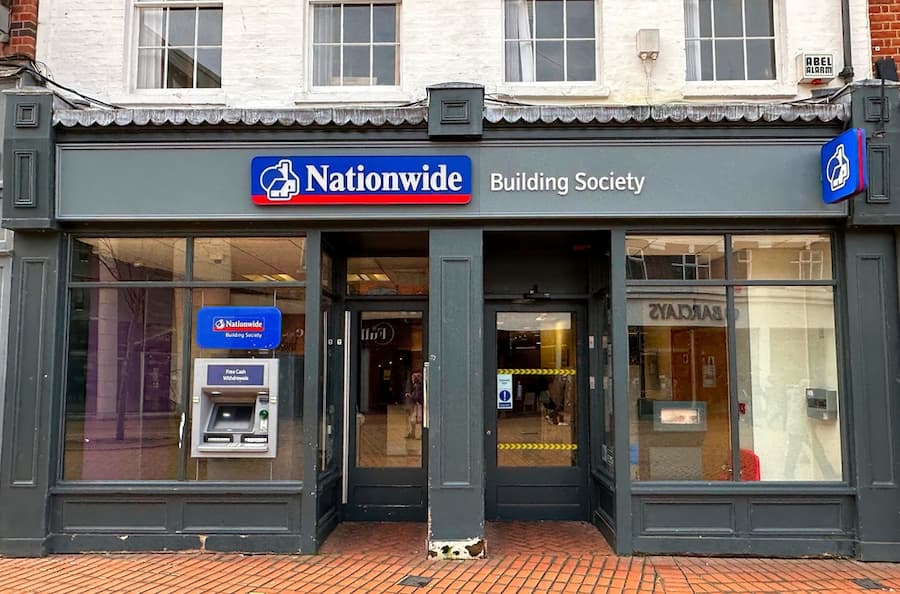

Nationwide Building Society has been fined £44 million by the Financial Conduct Authority (FCA) for “inadequate anti-financial crime systems and controls between October 2016 to July 2021”.
The financial regulator said the building society had “ineffective systems for keeping up-to-date due diligence and risk assessments for all its personal current account customers and for monitoring their transactions” during the period.
In one case, the FCA identified that Nationwide missed opportunities to spot fraudulent Covid furlough payments being paid to personal current accounts, with 24 payments totalling £27.3 million over 13 months. An amount of £26.01 million had been deposited over just eight days. HMRC has since recovered £26.5 million, but around £800,000 remains missing.
The FCA said the payments were just one example of an organisation that was unable to effectively identify, assess, monitor or manage money laundering risks among its personal current account customers. Nationwide did not have an accurate picture of its customers who presented a higher risk of financial crime, the FCA added, and was also aware that some customers were using personal accounts for business activity, in breach of its terms.
In mitigation, Nationwide said it had commenced a large-scale financial crime transformation programme in July 2021.
The FCA said it had reduced the initial fine of £63 million by 30% because the building society had agreed to resolve the issues.
Therese Chambers, joint executive director of enforcement and market oversight at the FCA, said:
‘Nationwide failed to get a proper grip of the financial crime risks lurking within its customer base. It took too long to address its flawed systems and weak controls, meaning red flags were missed with serious consequences.
‘Building societies and banks have a key role in the fight against financial crime. Firms must remain vigilant in this fight.’
Commenting on the fine, Phil Cotter, CEO of SmartSearch and formally the head of risk at Reuters, said the penalty is another reminder that financial crime controls aren’t functioning as as effectively as they should. He commented:
“Too often, AML and risk systems are approached as administrative obligations rather than essential protections against fraud and criminal activity.
“What stands out in this case is how long the weaknesses persisted. For years, Nationwide failed to identify clear indicators of elevated risk – including customers running business activity through personal accounts – and didn’t have the frameworks in place to properly assess or follow up on those concerns. The fact that these gaps may have contributed to missing red flags linked to a multimillion-pound Covid furlough fraud only underscores how serious the consequences can be when controls fall short.
“This isn’t an isolated incident; it echoes a broader industry pattern where policies exist on paper but aren’t consistently applied in practice – just look at the Barclays and Monzo fines from earlier this year. Our own findings show that many firms still struggle with basic customer verification and ongoing monitoring, leaving significant blind spots in their defences. The message should be clear: firms need to take a hard look at their systems, invest in modern compliance technology and build a culture where robust financial-crime prevention is non-negotiable and led from the top. Only then will these recurring failures start to diminish.”
The FCA has fined banks and building societies £300 million for failures in anti-money laundering systems and control failures since 2021.