
Data from Rightmove has revealed a stark north-south divide in the number of homes that would be liable for the new property tax mooted by the government this week.
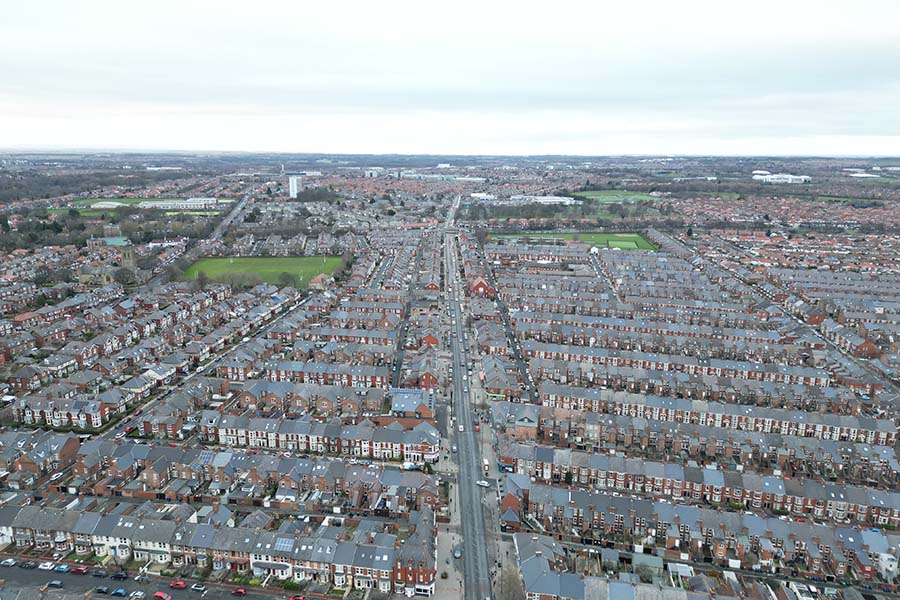
In London, 59% of homes for sale are priced at £500,000 or more, with 39% of homes in the South East and 28% in the South West reaching the qualifiying figure. But in the North East (pictured), only 8% of homes for sale are worth at least £500,000. That rises to 13% in Yorkshire and the Humber, 14% in East Midlands, 15% in the North West and 18% in the West Midlands. The number of qualifying homes in the East of England is slightly higher, at 29%.
Despite the regional discrepancies, Rightmove’s property expert Colleen Babcock welcomed any changes that would make home-moving more affordable.
She commented:
“Stamp duty is a huge barrier to movement, from first-time buyers to downsizers. We recently called for an increase to the zero rate thresholds at which first-time buyers and home-movers start paying stamp duty, and backed a suggestion from one of our agent partners that stamp duty should be paid over a longer time period.
“If changes are brought in that make home-moving genuinely more affordable for people then we would welcome them, but without firm details it remains to be seen if a different type of taxation would leave property owners better or worse off in the long run.”
Elsewhere in the industry the response was subdued, with warnings that the market could be disrupted in the absence of any firm plans.
Mark Slade, director on the Conveyancing Association board, said:
“From my point of view, it’s not the potential tax that is the problem, because of course at this stage we have no idea what it might be, but the fact this has been leaked into the public domain. It creates massive uncertainty in the market for property purchases over £500k in the months ahead, not least because the budget isn’t due to be held until the end of October/start of November. The gap between now and then means we could have potential sellers waiting to see what happens, and this could disrupt many existing chains.
“This is probably a ‘fishing exercise’ on the part of government to gauge reaction to such a change, but even doing this has major consequences. It would have been better to have decided on a strategy and implement it without leaking the idea. By doing it this way, it has the potential to end up being the worst of both worlds.”
Propertymark highlighted that any future changes to the current stamp duty system across England and Northern Ireland must be carefully considered, be fit for future purpose, and encourage the concept of homeownership for those who aspire to it.
In a statement, the organisation said:
“Proposals for a ‘proportional’ property tax regime must be wisely measured in alliance with key industry stakeholders and deliver a dynamic approach in terms of supporting the property ownership journey. Any revised system must assist first-time buyers, second steppers and those looking to right size.”
Timothy Douglas, Propertymark’s head of policy and campaigns, added:
“Discussions around reforming Stamp Duty are welcome because it is a significant barrier to moving and getting people on the housing ladder. What’s key is that any reforms are evidence based and support first time buyers, second steppers and those looking to right size.
“Economic growth can come from reducing the financial burden of Stamp Duty which we know increases the number of transactions, but any changes must work alongside differing property prices and the dynamic nature of our housing markets across the country.”
Daniel Austin, CEO and co-founder at ASK Partners, said the proposals are a short-term fix that would do little to stabilise the property market or support long-term economic growth.
He added:
“If implemented, the tax risks creating an artificial ceiling on many properties around the £500,000 threshold. While this may seem like a positive development amid the current housing crisis, most first-time buyers do not enter the market at this level, and because housing operates in an upward chain, the impact would reverberate across all price points.
“In London, where the average home now costs nearly £700,000, the measure would hit families hardest, incentivising sellers to increase prices further in order to absorb the tax burden.
“The Government is right to review the current system which does constrain the market. However, as I outlined in my recent letter to the Chancellor, the solution is not more taxes – it’s building more homes to increase supply and unlock market mobility.”