The latest analysis of land usage data has shown that just 8.7% of the nation is actually classified as ‘developed’, however, in some areas this climbs as high as 93.5%.
Searchland analysed data on England’s land usage looking at what proportion of the nation is classified as developed versus non-developed and vacant.
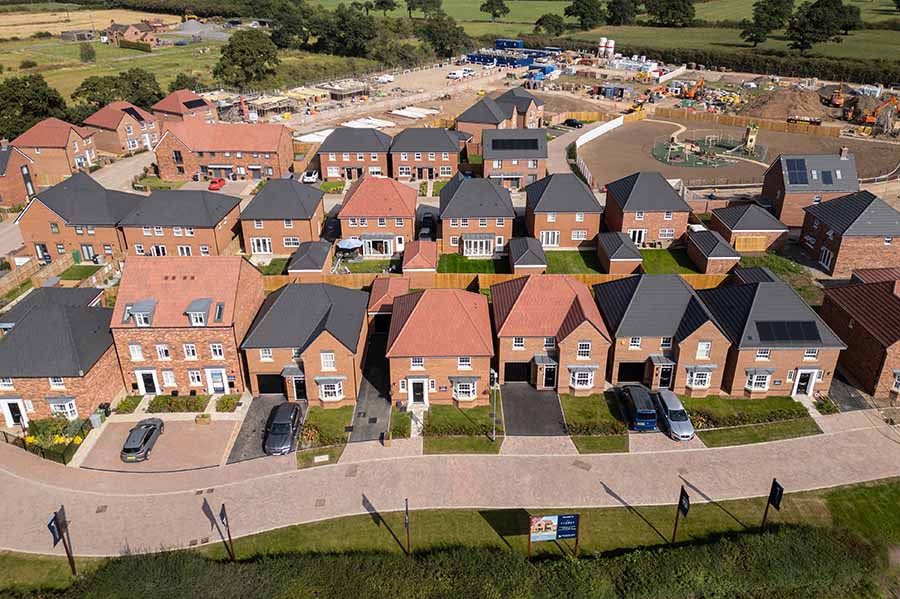
The research shows that over 1.1m hectares of land is classed as developed across England accounting for just 8.7% of the nation’s total land area. What’s more, 164,212 hectares of this land are classified as residential development, with the rest consisting of industry and commerce, transport and utilities, minerals and landfill, defence and community service.
Nearly 11.9 million hectares of land is currently non-developed, compared to 1.1 million which has been developed. This 11.9 million hectares includes agricultural land, forest, open land and water, outdoor recreation and residential gardens, with a further 25,000 hectares classified as vacant.
The South West of England is the least developed region of England, with just 7% of total land classified as developed. Both the North East (7.2%) and Yorkshire and the Humber (7.9%) are also home to some of the lowest levels of developed land of all regions.
London is predictably the most developed region, with 40.6% of total land classified as such. 63,834 hectares of the capital’s total 157,340 hectares have been developed. The South East is the second most developed region, where developed land accounts for just 9.9% of the region’s total.
The most developed area of the nation is the City of London, where a huge 93.5% of land is classified as developed, followed by Kensington and Chelsea, at 68.5%, and Islington, at 66.4%. Outside London the most built up local authority area is Liverpool, where 51.6% of land is utilised.
This is followed by the port city of Portsmouth, at 51.3%, and then Manchester, at 51.1%. Other areas outside of London to rank as the most developed include Norwich (49.7%), Southampton (49.7%) and Blackpool (48.2%).
Co-founder and CEO of Searchland, Mitchell Fasanya, commented:
“Given the enormity of the current housing crisis, it may come as a surprise to many that such a small proportion of the nation is actually classified as ‘developed land’ and an even more minute percentage of this falls under the category of residential development.
In many areas, developed land accounts for a far higher level of land use meaning that any opportunities to provide residential housing are few and far between. For those looking outside of these major towns and cities, the other issues faced include the classification of undeveloped land as green belt.
While the prospect of building on the green belt is such a contentious issue, if even a small proportion of this land was used to build more homes, the nation’s available housing stock could be boosted enormously.”