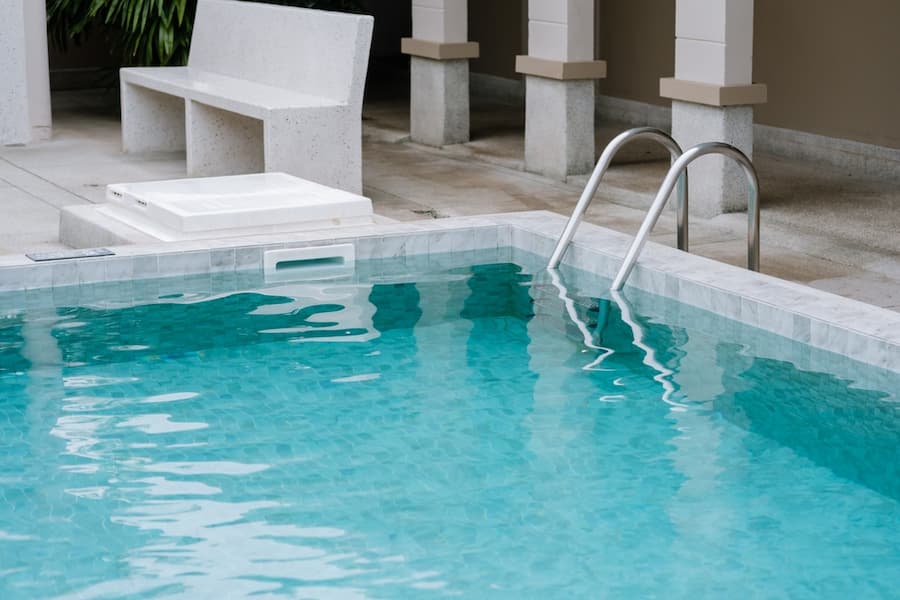

An £80,000 stamp duty appeal has ended in dismissal after HM Revenue and Customs (HMRC) successfully argued a pool house did not count as a second home for the purposes of multiple dwellings relief.
First-tier Tribunal appellant John Smith purchased an eight bedroom, three-acre estate in December 2023 for £2.6 million. Smith claimed an annex adjacent to a pool located on the property could be a single dwelling qualifying the property for SDLT relief. Smith claimed the SDLT due was £220,500; HMRC contended the amount due was £301,250, a difference of £80,750.
At the time of completion HMRC said the main property was “suitable for use as a single dwelling” and the disputed annex was not being used as a single dwelling.
The single storey building is “proximate” to the swimming pool and consists of five rooms: a main room; a plant room; a sauna room; a shower room; and a room with a toilet and sink. In his case Smith said the annex was suitable for a single dwelling, adding it offered “an occupant with facilities for basic domestic needs, together with sufficient privacy and security: it has a kitchen, a shower and lavatory, electricity and heating, its own oil supply and fuse box, a separate driveway and lockable doors, it is separated from [the Main House] by around 200 feet and a stream (with a bridge crossing), and is obscured from view from that building. It is, therefore, “suitable for use as a single dwelling””
HMRC disagreed saying the annex did not provide sufficient space to meet basic living needs or provide sufficient levels of privacy and security. Not only is the property on a single title at the Land Registry, the electricity meter, water meter, council tax rating and postal address are shared said HMRC.
In her comments Judge Rosa Pettifer acknowledged there were privacy issues with the pool house which could be seen into from the main house. Although curtains and blinds could obscure the view her conclusion was it was “not sufficient to dispose of the privacy concerns.”
She added “we are not satisfied that there are objectively realistic terms under which the Annexe could be occupied without a material intrusion on an occupier’s degree of privacy and security consistent with the concept of a single dwelling.”
The claim was dismissed with Smith offered the right to apply for permission to appeal.