
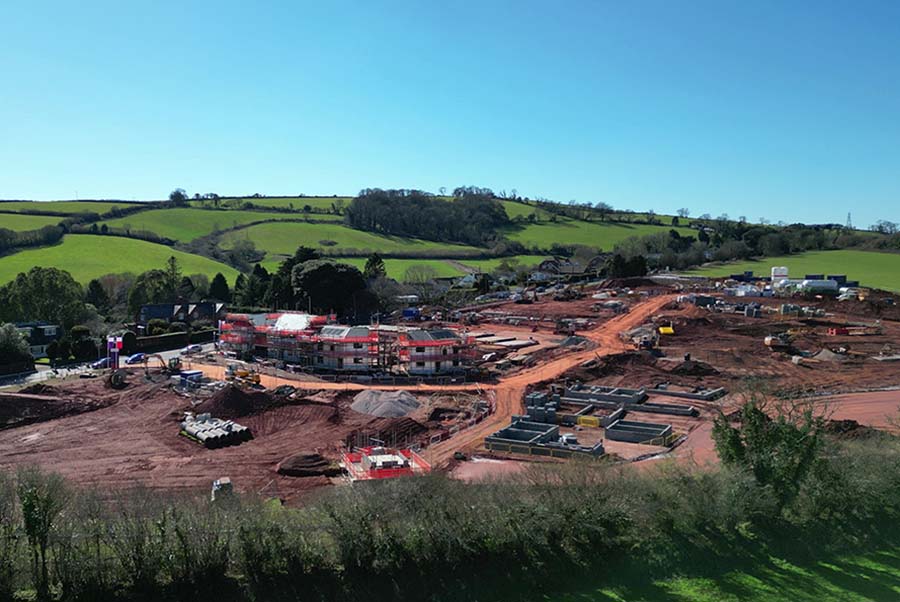

Andy Burnham will allow regional mayors to take over large-scale planning applications and direct councils to accept or refuse them in plans set to be announced this week.
In an interview with the Sunday Times, the prime minister acknowledged the plans would upset “nimby” [not in my backyard] local leaders and residents, but said the policy would allow mayors to give permission for “much-needed” projects.
Under the proposals, mayors in 13 areas – Manchester, Liverpool, the West of England and the West Midlands, along with combined authorities in North East England, South Yorkshire, West Yorkshire, York and North Yorkshire, Hull and East Yorkshire, Greater Lincolnshire, Cambridgeshire and Peterborough, East Midlands, and Tees Valley – will gain similar powers to those of Sadiq Khan in London, giving them the ability to “call in “ planning decisions on developments with more than 150 homes, as well as commercial space of more than 15,000 square metres and buildings over 30 metres.
In a social media statement confirming the plans, minister of state for housing and planning Matthew Pennycook said the government was “determined to give elected mayors the tools they need to set the strategic direction of development in their areas and to speed up delivery”.
He added: “Planning powers are a critical part of the toolkit mayors need to effectively deliver new homes and regeneration so we’re rolling out new powers that enable them to call-in strategic applications, make development orders and introduce community infrastructure levies.
“Local leaders know best how to realise the full economic potential of their areas and this government is backing them to ensure we deliver good growth in every postcode.”
The government has stressed local councils will continue to decide the majority of applications and all decisions must follow planning rules. But Steve Buckley, a volunteer member of a neighbourhood planning group in Cheshire, said the proposals are “a very concerning move”, particularly in relation to greenfield sites.
“Yes, we do have a need for more housing of specific types in certain areas, but we can’t use this as a free pass to build large numbers of the wrong type of houses on productive farmland, just because it is the most profitable option”, he said.
“We need to think longer term. Food security is vital. Give the mayors this power on brownfield sites and change the tax laws to encourage development there. We need to retain our green fields to produce the food we need and protect the environment.”
The lack of neighbourhood knowledge mayors possess is also “a big concern”, he added.
“Obviously the mayor will not decide alone, they will rely on a recommendation from council officers. Not all council officers will have the same local knowledge as residents and local councillors, so there is a danger that decisions can be taken in ignorance of the facts… The mayor will not have the eye for detail that residents will.”
The possibility of corruption is also a fear that needs to be addressed, Buckley warned.
“Whether it is real or unfounded, as and when decisions are made that the public regard as being incorrect, accusations of bribery and corruption will be rife.
“It is essential that the public retain the right to be consulted on these matters and have a viable route to challenge if there is evidence that the decision is unsound.”













One Response
This is not the democracy millions died to protect in the second world war. It is another way for this Labour government to force through its house building policy. Local planning officers will have the pressure of housing targets, which have been foisted on them by central government and the local residents will have no say in measures that will greatly impact their locality