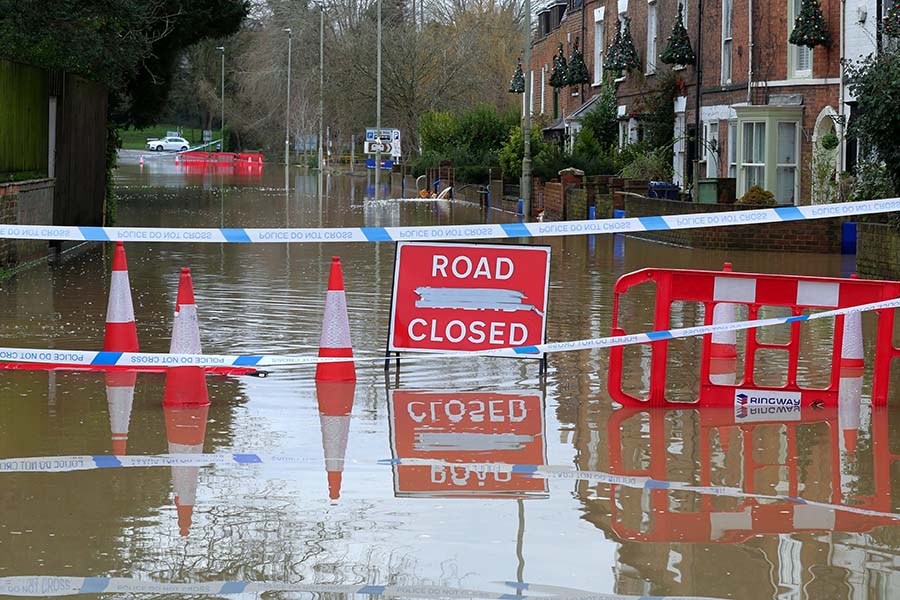

Aviva has warned millions of homes are at risk of surface water flooding and subsidence, with some of the UK’s most well-known landmarks at risk from the impacts of extreme weather if urgent action isn’t taken.
The insurer’s latest Building Future Communities report analyses the latest data to outline the risks homes could face from multiple climate threats by 2050 and beyond, including flooding, subsidence and extreme heat. The report also highlights the importance of preventative measures to help protect homes, businesses and communities across the UK.
Some of the UK’s most well-known landmarks, including Cardiff Bay, York city centre and Liverpool waterfront, could be vulnerable to flooding because of rising sea levels, heavier rainfall and more frequent weather events, the report warns. Even Edinburgh Castle could be at risk from surface water flooding from increased rainfall overwhelming drainage systems, it adds.
Jason Storah, CEO UK & Ireland General Insurance, Aviva, said the findings are stark and called for ‘urgent, collective action’ to mitigate risk. He commented:
“In the UK we have seen the impacts of our changing climate and this year is no exception. Record temperatures, wildfires and flash flooding have affected lives across the globe and it is clear that action is needed to adapt to the increasing frequency of these events.
“Our Building Future Communities report lays bare the risks that homes and businesses could experience by 2050. The findings are stark. Millions more properties could be at risk from flooding, with rising temperatures, increased urbanisation and inadequate drainage exacerbating the risks in future.
“Well-known landmarks will not be immune to the threats. A changing climate is already impacting us and, in future, it is likely we will need to learn to live with extreme weather. Adapting our properties and infrastructure is key.
“To make the UK climate-ready, we are calling for urgent, collective action to be taken to ensure we can mitigate the risks we will all face.”
The report also outlines how many properties could be at risk across the UK. In England, the number of homes at risk from flooding is set to increase by over a quarter (27%), from 6.3 million to 8 million.
While coastal flooding could put 3.2 million homes at threat, surface water flooding– or flash floods – are also likely to increase. Environment Agency data suggests the number of properties at risk in England could rise to 6.1 million between 2040 and 2060, including a 66% rise in the number of properties at high risk.
According to Aviva’s analysis, urban and densely populated areas, including London, Manchester and areas of the North East, could be hotspots for surface water flooding in future due to the greater prevalence of hard surfaces, which can prevent rainwater from draining.
The number of properties affected by flooding is also likely to rise in Scotland and Wales in the coming decades. In Scotland, 80% more properties could face river and coastal flood risk, and more than double are likely to experience surface water flooding by 2080.2 Projections for Wales look equally stark, with an 88% increase in river and coastal flood risk and 47% more properties facing surface water flooding by 2120.
While river, coastal and surface water flooding will become an increasing threat, some parts of the UK will face greater risks associated with hotter temperatures.
Aviva’s analysis suggests that subsidence is set to worsen in South East England, an area already vulnerable to such occurrences. However, by 2050, the areas at risk from subsidence could expand because of growing cities and rising temperatures. In future, parts of the Midlands, East of England and South Wales could be affected, exposing an additional 1.4 million homes.
Temperature increases are expected to become more pronounced in the UK, with southern England facing the biggest changes. Projections suggest a potential rise in maximum annual temperatures of up to 3.5°C in some areas, leadiing to health risks and higher risk of wildfires.
Storah added:
“There are solutions – big and small – which could help to improve the UK’s climate-readiness if we take collaborative and urgent action. Continued investment in flood defences, preventing unprotected new homes in flood zones, encouraging low-cost property resilience measures, and attracting more investment in nature-based solutions will help to mitigate the damage inflicted by a changing climate in future.
“By taking vital steps now, we can help safeguard millions of properties and protect important landmarks from climate impacts in the decades to come.”
Aviva has produced a series of tables which outline the risks from flooding, subsidence and heat by constituency. Further information on how to use the tables is provided here.
A full copy of the Building Future Communities report, including Aviva’s Calls for Change, maps, and more details about the UK landmarks, is available here.