
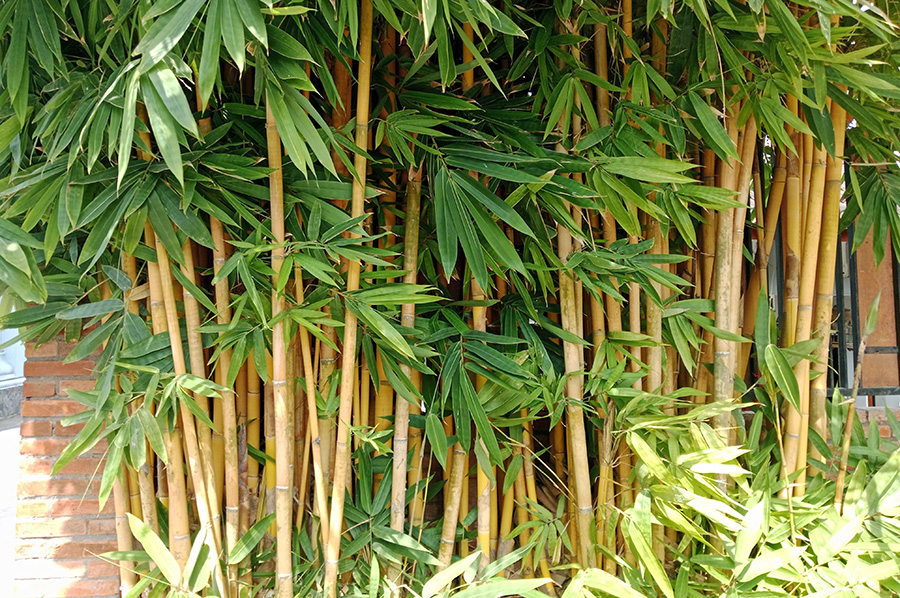

A survey by invasive plant specialist Environet suggests many homebuyers are unaware that the presence of bamboo can hinder the sale of a property, with only 38% of respondents saying they would be deterred from a purchase if the plant was present.
The YouGov survey of over 2,000 adults found that more than half (54%) weren’t aware the presence of bamboo can cause more damage to properties and gardens than Japanese knotweed and is more likely to instigate a legal dispute with a neighbour.
Only 38% said they would be put off by a bamboo infestation on a property they wanted to buy, with 71% agreeing they would be deterred if Japanese knotweed was present. Although there is a legal obligation to declare the presence of knotweed to buyers, bamboo can cause greater damage to property, Environent said.
“Its long, lateral roots can extend more than 10 metres from the original location, rapidly colonising new areas including lawns, flowerbeds, paths, patios and travelling underneath sheds and buildings. Unlike other plants, individual canes emerge from the ground at their full diameter and grow to the full height during a single growing season of 3 to 4 months.”
In a case shared by Environet, a surveyor spotted small bamboo shoots in several locations when completing a Level 3 Building Survey for a buyer. Further investigation revealed 350 square metres of bamboo rhizome growing beneath the ground throughout the garden. When questioned, the sellers revealed the garden had been invaded by 10 metre high plants, which they had attempted to remove before selling.
The homeowner explained:
“The previous owners were aware of the bamboo but it seems they intended to sell the property without properly addressing the issue or informing me. Luckily, I had a good surveyor who noticed roots visible in various places and sporadic new growth, and suggested I get a bamboo survey. That revealed the true extent of the problem. It took a specialist team five full working days to remove it using a mini digger and sifting through the soil by hand to ensure nothing was left behind.”
After identifying the presence of the plant, the £11,000 cost of removal was deducted from the asking price.
‘Awareness of the risk posed by bamboo is growing and we’re seeing more cases of it being flagged up by surveyors during property transactions, giving buyers the opportunity to decide whether they’re willing to accept the risk or insist that the seller pays for it to be removed’, said Environet director and invasive plant expert Emily Grant.
“However surveyors are under no obligation to check for bamboo, as they are for Japanese knotweed, so there are still plenty of cases where buyers inherit a problem they then have to pay to deal with themselves. In one case, a neighbour knocked on the door the day after our client moved in to ask what they were planning to do about the bamboo that was encroaching into their garden. Sellers don’t have to declare it so there’s no legal recourse against them, which is why it’s so important to be vigilant when buying a property and if you’re not sure, get a bamboo survey.”

















One Response
Juliet, oh my! Where oh where to begin? First, thank you for the opportunity to reply. The only two characteristics that bamboo and knotweed share is an aggressive growth pattern. Otherwise, they have nothing to do with one another.
“The YouGov survey of over 2,000 adults found that more than half (54%) weren’t aware the presence of bamboo can cause more damage to properties and gardens than Japanese knotweed and is more likely to instigate a legal dispute with a neighbour.”
Response: This is due to under education on the plant.
“Its long, lateral roots can extend more than 10 metres from the original location, rapidly colonising new areas including lawns, flowerbeds, paths, patios and travelling underneath sheds and buildings. Unlike other plants, individual canes emerge from the ground at their full diameter and grow to the full height during a single growing season of 3 to 4 months.”
Response: What you describe takes years to happen. One question this raises for me is, why did you wait so long to take action? Next, why not install a root barrier at the time of planting as this would solve the entire discussion? A simple installation of a root barrier keeps the rhizome in place and prevents any spread. Point of correction, bamboo grows to it’s full size in 8 weeks, not 3 to 4 months.
“The previous owners were aware of the bamboo but it seems they intended to sell the property without properly addressing the issue or informing me. Luckily, I had a good surveyor who noticed roots visible in various places and sporadic new growth, and suggested I get a bamboo survey. That revealed the true extent of the problem. It took a specialist team five full working days to remove it using a mini digger and sifting through the soil by hand to ensure nothing was left behind.”
After identifying the presence of the plant, the £11,000 cost of removal was deducted from the asking price.”
Response: Your kidding me right? These people went way overboard and got ripped off in the process! Lesson #1 who in the class has heard of photosynthesis? Clearly no one. I’ll explain, during shooting season, when the new shoots first emerge then are covered in a sheath which holds the branches and leaves under the sheath. The sheath’s begin to fall off after a week and a half to two weeks. This means, during this time ZERO nutrition is going to the rhizome which will simply make the rhizome die off over time (between 1 and 3 seasons). Why am I explaining this? All they needed to do was mow about every 10 days during the shooting season which coincides with regular lawn growth. 15K U.S., I would repeat the saying “there is a sucker born every minute”. At 60 years of age I’ve removed backyard groves with a shovel.
‘Awareness of the risk posed by bamboo is growing and we’re seeing more cases of it being flagged up by surveyors during property transactions, giving buyers the opportunity to decide whether they’re willing to accept the risk or insist that the seller pays for it to be removed’, said Environet director and invasive plant expert Emily Grant.”
Response: I’m not sure if Emily was mis-quoted or not, which does happen. Emily says “the risk”. Any risk is solves by encapsulating the planting area with a simple bamboo root barrier prior to planting. I install them 26″ into the ground leaving 4″ above ground. Problem solved. I’ve been installing them for over 20 years without a failure. Emily should know that bamboo does not meet the criteria qualifying it as an invasive specie. It can not fold land not does it seed with any regularity. It is an aggressive grower, but not invasive. When bamboo does seed ot is quite difficult propagating by seed.
The plant seems to have gained some form of concern in the U.K.. I attribute this to a lack of bamboo experts. You only seem to have landscapers and contractors solving these problems in article after article I read. These are not the right people to help these issues. You need someone that specifically works with bamboo.The two types of bamboo are never spoken of, only “running” bamboo. There is also “clumping” bamboo. Clumping bamboo (in your climate zone) will only grow an inch to two per year, no more than a hosta plant. It has none of the spreading qualities of running bamboo. Yet this daemonized plant sequesters carbon and provides oxygen back into the atmosphere at a rate of 36% higher than any other plant on our planet. What that means is if planted in mass throughout the world, bamboo on it’s own could reverse the effects of climate change within approximately 9 years. Just one of it’s thousand and one uses.