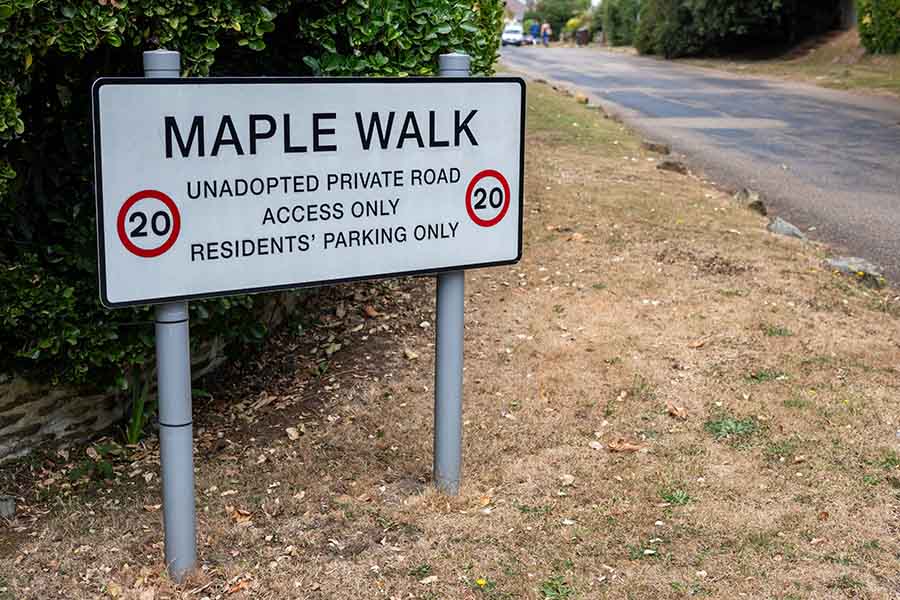

Delays to the adoption of new roads threaten to undermine efforts to increase house building, the Home Builders Federation (HBF) has warned, after a freedom of information (FoI) request found councils are taking up to to 12 years to take responsibility for roads serving new housing developments.
In a new report, Slow Lane to Adoption, the HBF reveals its FoI found local authorities apply different standards, fees, bond requirements and timescales to the adoption of new roads, making it harder to predict both the cost of delivery and any impact on the viability of bringing new homes forward. The issue is particularly challenging for SMEs, the HBF said, which have less capacity to absorb unexpected costs and delays.
The average highway bond – the financial guarantee required by councils to be paid by house builders to ensure new roads are built to the required standard – has risen almost 170% since 2018, from around £125,000 in 2018 to £338,000 in 26. Individual bonds range from £15,400 to £1.4 million.
The research also found that section 38 agreements take just over four years on average from submission to adoption, but some take up to 12 years. The agreements, which allow developers to make changes to existing roads, can take up to a year to be approved, with a further two years from approval to completion. Local authority inspection fees ranged from approximately 3% to 20% of the bond value.
The report highlights how roads and other unadopted estate amenities impact home owners, with builders left with no option but to bring in private management companies to take on responsibility for maintaining roads, open spaces, drainage, lighting and other shared infrastructure. As a result, residents can face additional estate management charges in addition to council tax, the HBF warns.
Increases in taxes and the cost of policies introduced by successive governments have added an extra £76,000 to the cost of delivering every new home, the HBF says, leading to sites “across swathes of the country” becoming unviable for development.
Last year, HBF research found that just 10% of developments where 10 or more homes had been built in the previous three years have had roads adopted by local authorities. Almost all new sewers (97%) and sustainable drainage systems (98%) remained unadopted.
A government consultation was launched in December to review the prevalence of private estate management arrangements for unadopted amenities including roads, drainage and green spaces.
At the time the government said it was considering the introduction of several measures, including increasing adoption by public authorities, common standards for adoptable amenities and mandatory adoption for some infrastructure. Proposals also included removing financial incentives that make non-adoption attractive to developers and improving transparency and data on estate management arrangements. The outcome of the consultation has not yet been released.
The HBF said it supports the recommendations made by the Competitions and Markets Authority’s 2023 Housebuilding Market Study, which called for common adoptable standards and mandatory adoption of public amenities on new housing estates, and is urging the government to establish a consistent national approach to highway adoption.
Recommendations from the HBF include common adoptable standards, nationally consistent bond and inspection fee requirements, statutory timescales for Section 278 and Section 38 agreements, and clear national standards for commuted sums.
HBF chief executive Neil Jefferson said: “The government’s ambition to increase housing supply relies heavily on private home builders to deliver, but central and local government needs to work with industry to ensure sites are viable if they want to see more homes getting built.
“Planning reform is an important first step, but if sites then face soaring highway costs, unpredictable requirements and years-long delays, their viability can quickly be undermined. It also increases costs for homeowners who have to pay management companies to maintain their roads, alongside full council tax that would ordinarily cover those costs.
“Government must address these wider barriers to delivery and create a consistent, transparent highway adoption process, so that planning permissions can translate into the homes the country needs.”