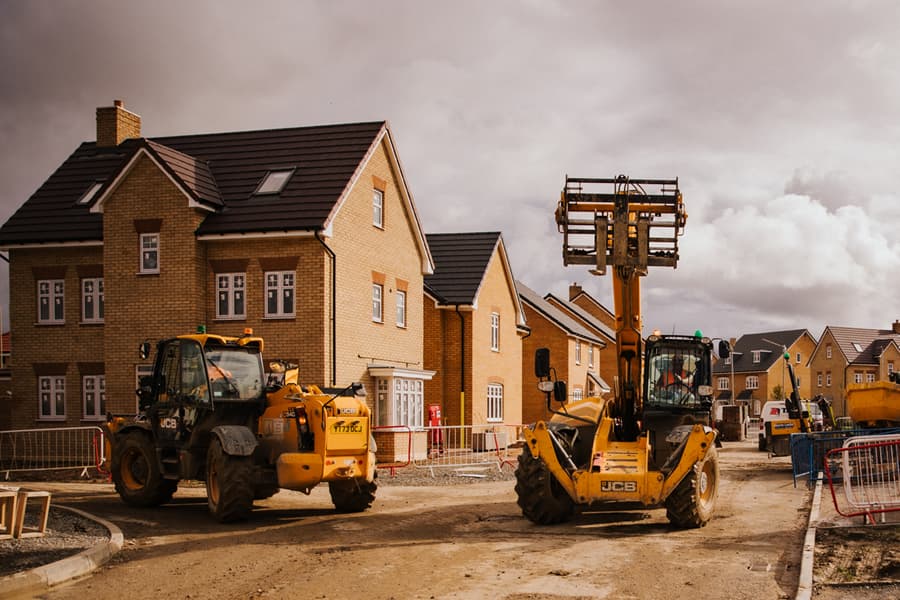

The number of new homes being built nationally is falling, according to figures published by the National House Building Council (NHBC) which show 29,162 new homes were registered to be built in Q2 2026, down 4% on Q2 2025 (30,259).
There is a mixed picture across the UK, the NHBC says, with six out of 12 regions seeing a decline in registrations in Q2 2026 compared to Q2 2025. The biggest decreases were in the South West (-42%), East Midlands (-36%) and Wales (-34%). London saw the biggest rise (+170%), with the North West (+37%), East of England (+15%), South East (+12%), West Midlands (+7%) and Scotland (+6%) also experiencing uplifts.
Mounting cost pressures and geopolitical uncertainty were cited as factors in the 5% fall in private sector registrations – from 20,097 in Q2 2025, to 19,045 in Q2 2026. Registrations in the rental and affordable sector were broadly unchanged from the second quarter of 2025, with 10,117 new homes registered compared with 10,162 a year earlier.
Daniel Pearce, chief strategy officer at NHBC, said: “Elevated interest rates, geopolitical volatility and rising costs combined with affordability pressures impacting consumer demand, meant that many house builders slowed their build programmes in the second quarter.
“While the decline in new home registrations will come as little surprise, we welcome the commitment from new Prime Minister Andy Burnham to roll out the most ambitious council house-building programme since the post-war era; this will be an important lever in boosting overall supply. Greater clarity on the mechanisms and funding to deliver this will be welcomed by the industry and house builders stand ready to play their part.
“Accelerating planning reform and easing regulatory burdens would also help boost housing supply, while measures to improve affordability for prospective buyers are essential to unlocking demand.”
Pearce cautioned against over-stating the increase in London registrations: “Registration volumes in London are often more volatile than elsewhere in the country, with large developments frequently registered over short periods rather than evenly throughout the year.
“This reflects the prevalence of large, high-density schemes, which typically involve longer planning and delivery timelines before substantial volumes of units are brought forward and registered, creating more pronounced peaks of activity.
“The next two quarters of NHBC data should provide a clearer indication of whether this upward trend for London is sustained.”