
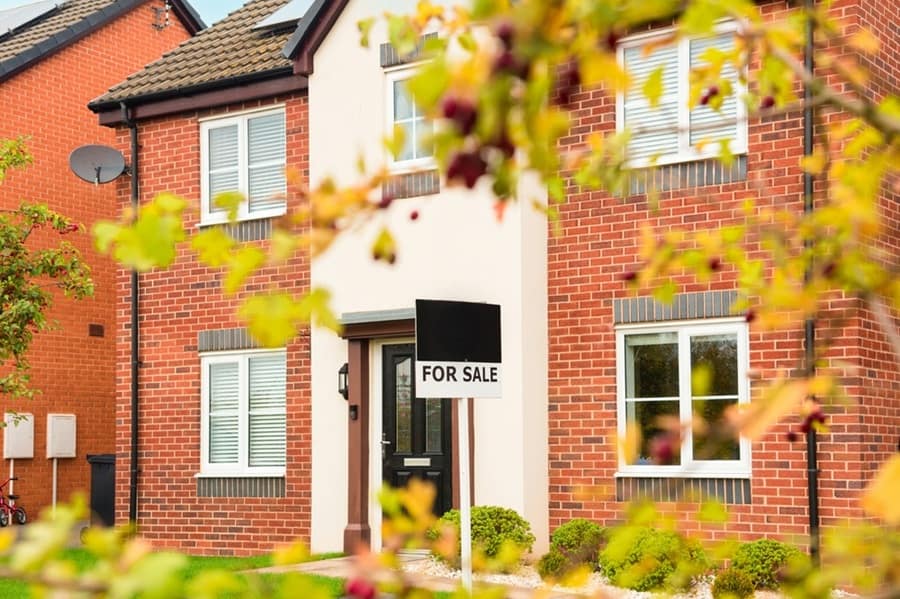

Failed house moves could be costing the economy almost £2 billion every year, according to new research published by the Open Property Data Association (OPDA), with many collapses occurring after the offer has been accepted.
According to OPDA’s research, 58% of home moves fall through after offer acceptance. Santander’s Fixing the Broken Chain calculated an estimated direct cost to buyers and sellers of £2,830, including legal fees, surveys, mortgage costs and lost time and productivity. The total cost to theUK economy could be as high as £1.97 billion every year, OPDA said.
The survey of 5,000 respondents who had bought or sold a house in the past five years revealed the average length of time wasted on each failed transaction was around three months. One in six transactions collapsed after four months and one in ten fell through after five months or more. When asked how they were affected by a collapsed sale or purchase, 43% cited emotional stress as the biggest impact, and 41% said their plans were significantly delayed.
The impact was felt most acutely by older home movers: among those aged 55 and over, 59% reported high levels of emotional stress.
OPDA chair Maria Harris (pictured right) , said: “These figures lay bare a housing market that is failing consumers at every stage. Far too many transactions collapse because crucial information only comes to light weeks or even months after an offer is made. By then, buyers and sellers have already invested significant time, money and emotional energy.
“Providing upfront, standardised property data through digital property packs would transform this process. When material information is available at the point of listing, buyers can make informed decisions, issues can be identified early, and far fewer transactions fall apart late in the process.
“Upfront property data isn’t about adding bureaucracy, it’s about bringing transparency, certainty and trust back into the housing market. By embracing digital property packs, we can reduce fall throughs, shorten transaction times and create a fairer, more resilient system that works for everyone.”
 Phil Spencer (left), property expert and founder of property advice website Move iQ, added: “The collapse of a house move can be devastating for everyone involved, creating further anxiety in an already stressful process. For buyers and sellers, these fall‑throughs often mean months of uncertainty, money lost on fees that can’t be recovered, and plans put on hold.
“Much of that pain could be avoided if people were given clear, reliable property information upfront. When buyers know what they’re committing to from the start, they can proceed with confidence, avoid nasty surprises later on, and reduce the risk of deals collapsing after so much has already been invested.”
OPDA is the UK’s industry body leading the modernisation of the home buying and selling process through the introduction of smart data. It supports the introduction of upfront digital property packs, providing buyers and sellers with crucial information before the sale process starts.













2 responses
OPDA has always had a talent for dramatic numbers; their famous “300 documents” claim still wanders the legal landscape like a friendly myth, somewhere between Bigfoot and the Loch Ness Monster. But as the Conveyancing Task Force has consistently pointed out, when you rely on inflated assumptions, selective data, and a pre‑written narrative of dysfunction, you can conjure almost any figure you wish. Even £2bn.
The real fall‑throughs in the system rarely originate with the professionals who carry the legal risk. They arise from under‑supervised conveyancing factories, from lawtech pipelines that promise acceleration but deliver gridlock, and from regulatory layers so dense that even the most diligent practitioner needs a compass to navigate them. Yet, somehow, the blame always seems to circle back to the people actually doing the work.
CTF’s message has been steady and simple: a narrative built on exaggeration is not a narrative built on integrity. And when those who profit from portraying conveyancing as “broken” are also the ones producing the most theatrical numbers, the sector is entitled to raise a polite, weary eyebrow.
If we are serious about the costs borne by home movers, we should begin with the real ones: the cost of opacity, the cost of referral‑fee steering, the cost of volume‑model shortcuts, and the cost of pretending that technology can replace judgment. Until then, £2bn feels less like analysis and more like another chapter in OPDA’s expanding anthology of creative fiction
I have a couple of questions;
1) Are fall throughs costing the economy or is it costing the consumer? It can’t be both, if it is costing the consumer £2bill then it’s actually contributing £2bill to the economy. If we save the consumer £2bill by fixing the problems we are actually then removing this £2bill from the economy….I am in full support of reducing the number of fall throughs we see each year but we should definitely report this properly.
2) If 58% of offers don’t fall through until after offer acceptance then I would argue the other 42% aren’t actually ‘deals’ in the first place. How can something ‘fall through’ if it has never been agreed?
I guess my third question is; What am I missing on these two points? I am very conscious this could be me entirely misunderstanding the article.