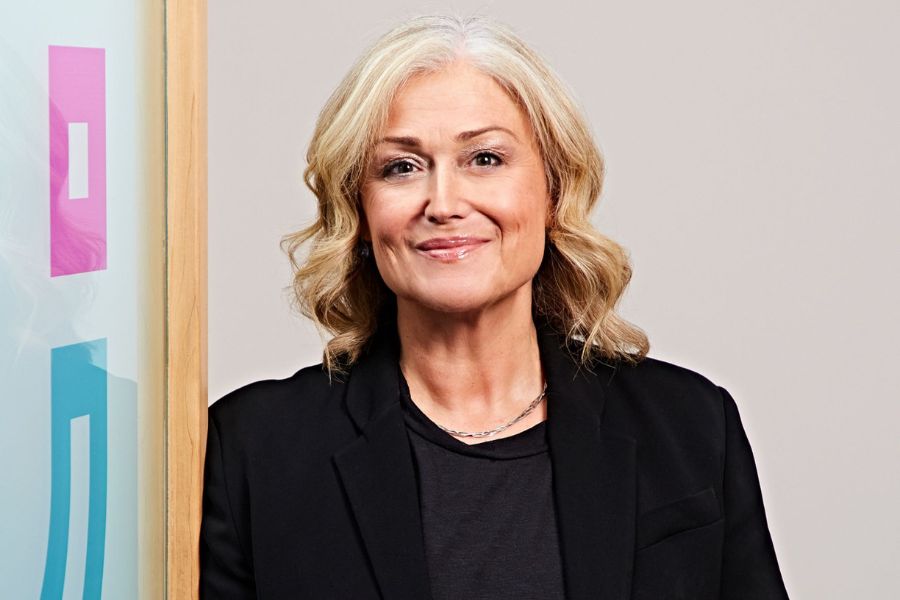

Lorna Thomson is a partner and head of residential conveyancing at Clifton Ingram, bringing decades of experience in property law to her role. Having qualified in the 1990s, she has built a career spanning both residential and commercial property. She now leads a busy and growing team of lawyers and support staff across three offices advising clients on a broad range of property transactions
What was your career path to your current role?
I qualified as a solicitor in 1995 and have worked in property law throughout my career. Over the years, I have acquired a wealth of experience across both residential and commercial matters and spent a few years as in house lawyer with a blue chip property investment and development company in the 90s. Ultimately, my heart lay with residential conveyancing and I chose to specialise solely in residential property around 2011.
I am now a partner and head of residential conveyancing at Clifton Ingram, taking on the role following the successful merger between Clifton Ingram and Bells Solicitors in 2021.
Did you have any other career ambitions?
No, from a young age, I always knew I would be a lawyer and once I found my way into property law, it felt like a good fit very quickly.
I have always enjoyed working with people and dealing with practical, real-life situations, which is very much what conveyancing involves. It is also an area where you can see tangible results from your work, which I have always found satisfying.
What keeps you motivated in your work?
It is a combination of variety and the people you work with. No two transactions are ever quite the same, and there is always something new to navigate or resolve.
At the same time, you are helping clients through important life events, whether that is buying their first home or making a later-life decision. That sense of involvement and responsibility keeps the role engaging. Working closely with a team and seeing people develop in their roles is also a big motivator.
If you could change one thing about the transaction process, what would it be?
Communication.
There are so many different elements involved in a transaction. Delays can often arise where processes or expectations do not quite align and this inevitably leads to friction.
That said, there is much we can do now in terms of setting a schedule of proactive updates and moving away from the traditional reactive emails. Even if we are pushing ahead behind the scenes, unless we communicate this to the client, they can feel they are doing all the chasing. Perception is everything. I find the majority of conveyancing complaints are rarely about the quality of the work, rather it is the failure to communicate effectively.
What has been the best development in conveyancing in the last 20 years?
The shift towards digital working has been hugely positive.
I think it is absolutely essential that we embrace technology, whether we are comfortable with it or not. Simple things like the introduction of digital signatures, for example, has been a lifesaver on many occasions where I have clients overseas with an urgent exchange of contracts required to stop a chain collapsing. Online searches, improved case management systems and faster communication have all helped to make the process more efficient and have certainly reduced some of the delays that used to come with more traditional, paper-based systems. Combined, this does make it easier to keep clients informed throughout a transaction.
And the worst?
The growing pressure around timescales and expectations has probably been the most challenging development.
Clients understandably want transactions to move quickly, but the process itself has not necessarily become simpler. Contrary to popular belief, conveyancing is not a tick box exercise and it is rarely black and white. When you add in increasingly onerous regulatory requirements, it makes the role incredibly demanding at times.
Do you think conveyancing will ever be fully digitalised?
I think it will continue to move in that direction, but I do not think it will ever – or should ever – be completely digital.
There are still many aspects of the role, particularly around giving advice and supporting clients, where the human element is essential. Technology can support the process, but it cannot replace that entirely. Sending a beautifully written comprehensive report which covers absolutely everything and includes copies of all the supporting documents can run to hundreds of pages. This is undoubtedly overwhelming for the clients and whilst it may protect the firm in terms of documenting what advice has been given, the clients need to be able to speak with their lawyer and feel comfortable to ask any questions they have so they fully understand the process and what they are being asked to sign before they are legally committed.
Do you think it should be?
Anything that helps improve efficiency and reduces unnecessary delays is a positive, especially when clients are so concerned about a prompt outcome.
However, I do think it is important to strike the right balance. Clients still want reassurance and clear guidance, particularly when transactions become more complex, and that is something that requires a personal approach.
What is the best piece of advice anyone ever gave you regarding your career?
To take your time and build your experience properly. Conveyancing is one of those areas where confidence comes with exposure. The more situations you deal with, the more problems and difficulties you face (and overcome!), the more comfortable you become in handling them. Every day is a learning day for me, even after 30 years.
What advice would you like to give to someone just starting out?
Don’t be afraid to ask questions, and make sure you take the time to understand the basics. There is a lot to learn. Check, check and check again. Make sure you get the little things right.
If you focus on building a strong foundation and take things step by step, it does start to come together. Experience is key in this area, and the more you are exposed to, the more confident you will become.
Tell us something people may be surprised to know about you…
I had the privilege of qualifying to fight at the British Judo Championships many moons ago. Unfortunately, by the time my parents had parked the car and paid their entrance fee to come and watch me fight, I had already been knocked out by a much more experienced black belt. It was a long drive home!
If you’d like to appear in a profile, email press@todaysconveyancer.co.uk with ‘Profile’ in the subject line.