
New data released by HM Revenue & Customs (HMRC) has revealed that although property transactions fell considerably during the usual December dip in activity, activity remains broadly in line with previous years.
HMRC said the provisional non-seasonally adjusted estimate of the number of UK residential transactions in January 2023 is 77,390.
This is 7% lower than January 2022 and a 27% month-on-month drop from December 2022. Seasonally adjusted, however, the month-on-month drop is just 3% despite the storm of rising rates and rampant inflation that has engulfed the economy over previous months.
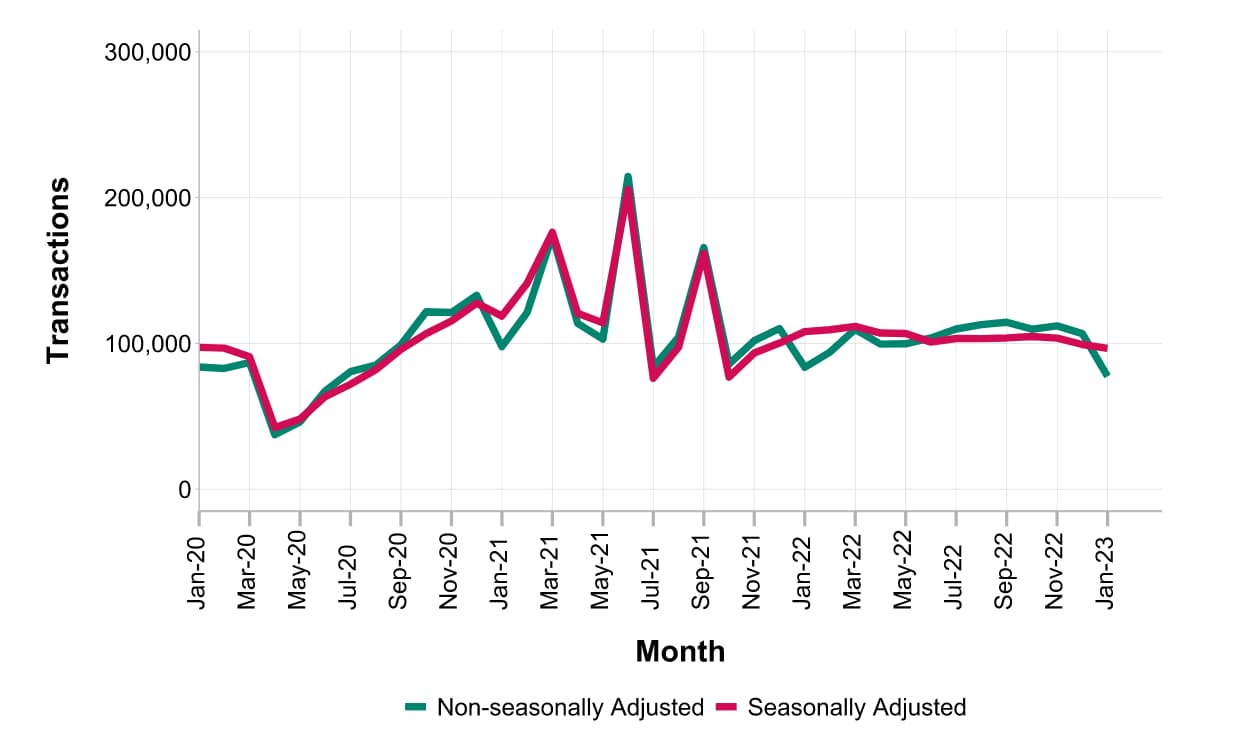
While the figure of 77,390 deals in January does mark the slowest start to the year in over a decade, the disparity is quite ordinary. It’s almost identical to the 77,750 seen in January of 2015 when the base rate of interest was 0.5%. Figures also failed to breach 85,000 in seven of the previous nine years during January.
What’s more, non-seasonally adjusted total transactions for the financial year until now sit at 1,029,580 which, excluding last year, is the highest level seen since 2015-16.
“Although recent activity has not been at the sky-high level we have become accustomed to in the past three years, there is certainly no reason to panic,” said Clare Beardmore, Director, Legal & General Mortgage Club, adding that the UK’s housing market is “famed for its resilience”. She continued:
The pace of lenders beginning to compete on pricing is encouraging buyers to press ahead. Product choice is also improving, with Moneyfacts reporting that available products surpassed 4,000 for the first time since August – almost double what it was at the end of October following the ‘mini Budget’ fallout.”
Andy Sommerville, Director at Search Acumen, said the encouraging macroeconomic figures and avoidance of recession have offered a “green shoot of hope” for the market:
“This has given banks more confidence to lend, and homeowners the motivation to keep going with their move. With the Budget approaching and a new housing minister in place, looking ahead we hope that the property industry may receive the stability it has been craving for some time.”
Sarah Coles, head of personal finance, Hargreaves Lansdown, was less optimistic:
“While there’s some lingering optimism that lower mortgages may tempt some buyers back, the heady days of the peak – where at one point we saw more than 214,000 transactions in a month – are well and truly behind us.
This end of the year is always pretty slow, but this January, property sales moved at a glacial pace, and they’re unlikely to gain much more momentum for some time to come. The RICS Residential Market Survey has charted seven months of falling numbers of agreed sales – since June – and while the pace of the decent slowed in January, it’s still heading south.”
Karen Noye, mortgage expert at Quilter said:
“These statistics are the first that take into account the fallout from the mini-budget and therefore the huge rise in mortgage rates post event. However, since then rates have significantly dropped after their peaks towards the back end of next year which might help keep transactions at least stable as people continue to cautiously enter the market feeling the worst is now behind them.
Although the cost-of-living crisis is certainly hurting people’s finances, some of the worries about a huge house price crash may have been averted and while transactions and house prices are falling, they may avoid anything akin to 2008. However, while the outlook is certainly more predictable than it was back in December it is still going to be financially difficult for millions and this will undoubtedly have an impact on the number of people choosing to move house.”